Top Mobile Device Technical Support Challenges

Common Tech Support Issues for Rugged Mobile Computers

Every company is unique, but we encounter certain common themes when helping customers work through technical issues with their mobile devices. CSSI provides mobile device technical support for the top rugged mobile computer and tablet brands, including Zebra technical support , Honeywell technical support , and Datalogic technical support , among others. Here are several of the frequent challenges our help desk encounters:

1. Selecting the right mobile device configuration and accessories

The challenge: It’s important to select the right device upfront, or all of your work down the road will be harder. There are so many devices from so many manufacturers (and multiple configurations of each mobile device) that it is extremely difficult to make the right choices if you lack experience in the mobile device space.

How CSSI helps: Our customer service team spends all of its time working with rugged mobile computers, and is very knowledgeable about the brands we support such as Zebra, Honeywell, and Datalogic (among others). Our approach to recommending the right device starts with an assessment of your needs, often beginning with a site visit for discovery. We will place demo equipment in your facility so that your team can test proposed devices to ensure the ‘right fit’ for your need.

See also: Why partner with CSSI?

2. Preparing new devices for deployment

The challenge: Have you ever had boxes of new devices stacked in your office while you struggled to find the time to set them up and put into production? It can be daunting to take on the deployment job, particularly if you are dealing with a large quantity of equipment.

How CSSI helps as a mobile computer support partner: We use our pre-sale engagement with you to start developing your mobile device configuration profile. Our proof-of-concept testing will enable CSSI to fine-tune your setup. It is our preference to have your configuration locked down prior to your receipt of new devices. This will enable you to push incoming equipment into the live environment much more quickly.

See also: Mobile device management services.

3. Android Device OS Upgrade Challenges

The challenge: It’s time to update from windows devices to new Android devices, or to upgrade to a new version of Android, and the internal team is unsure how to proceed, or finds that existing applications are broken after the OS update.

How CSSI helps: We are extremely experienced with all manner of operating system updates and upgrades. Customers who are moving on from older devices running Windows Mobile or Windows CE can be rapidly migrated to Android using our mobile device support tools. Also, customers who are struggling with the new security demands of Android 11 or 13 will benefit from CSSI’s experience and troubleshooting in these situations.

See also: Our writeup on Android 11 / scoped storage device challenges.

4. Management of deployed devices

The challenge: It’s hard to support and manage large quantities of mobile devices without remote access, especially when they are located at multiple locations. The company risks device downtime, user frustration, and security issues.

How CSSI helps: We recommend the use of mobile device management software. MDM allows us to offer remote support to manage devices regardless of where they are. Setting configuration standards, adding new software, updating mobile app permissions, changing security settings, updating the OS… all of these can be accomplished without being in physical possession of the mobile device. CSSI even offers a service program called Device Lifecycle Management in which we take over the management of your mobile device fleet.

See also: Our Device Lifecycle Management service problem.

5. Device wireless connectivity problems

The challenge: “Devices losing connection” is a frequent source of pain. It can be hard to pin down… is the issue with devices, or the network, or software?

How CSSI helps: We start with attempting to drill down to the underlying cause. If the issue is indeed with your Wi-Fi network, we offer Wi-Fi consulting services such as site surveys and recommended equipment and configurations.

See also: Our content on ‘6 most common warehouse Wi-Fi Problems‘.

How Can CSSI Help? What’s Your Mobile Device Support Challenge?

If you are encountering a technical issue with your mobile devices, please contact CSSI for technical support . We can use our tablet and mobile device expertise to help you identify and fix your issues.

Q: How do we know which rugged mobile computers and accessories are the right fit for our operation?
A. The biggest support headaches usually trace back to devices that were never matched to the environment they’re deployed in — the wrong form factor, scan engine, or battery configuration for the workflow. Before recommending hardware, CSSI runs a needs assessment and site visit, then puts candidate devices through an on-site demo so you can validate fit under real operating conditions before committing budget to a fleet-wide rollout.

Q: We have a large batch of new devices arriving. What’s the best way to avoid deployment bottlenecks?
A. Bottlenecks happen when configuration work starts only after the hardware lands, leaving IT to stage, image, and enroll dozens or hundreds of units at once. Building configuration profiles during the pre-sale phase — and completing proof-of-concept testing before the equipment arrives — lets your team move new devices straight from the box to production without a backlog.

Q: What should we expect when upgrading Android versions or migrating off Windows Mobile/CE?
A. OS transitions are a common source of broken line-of-business apps, especially when moving off legacy Windows Mobile/CE platforms or jumping several Android versions at once. Newer Android releases also introduce changes like scoped storage in Android 11 that can affect how existing apps read and write data. Planning the migration around application compatibility testing, rather than treating the OS update as a routine patch, is what prevents downtime on upgrade day.

Q: Our device fleet is spread across multiple sites — how do we manage updates, permissions, and security consistently?
A. Geographically dispersed fleets are difficult to manage device-by-device, and that gap is where downtime, user frustration, and security exposure creep in. Mobile device management (MDM) software addresses this directly, giving IT remote visibility and control to push configuration changes, software updates, and permission or security adjustments across the entire fleet from a single console.

Q: Devices keep losing wireless connection on the floor — is that a device issue or a network issue?
A. It can be either, which is why connectivity complaints are hard to troubleshoot without a structured approach. A proper root-cause analysis isolates whether the problem sits with the device, the wireless network, or the application layer. A Wi-Fi site survey — mapping access point placement and coverage against how devices actually move through the facility — is typically the fastest way to pinpoint the cause and fix it at the source rather than swapping hardware. Read more on common wi-fi challenges.

Providing Sales and Support for Datalogic Hardware

CSSI Technologies is pleased to announce that it is an authorized reseller of Datalogic mobile computing and data capture / barcode scanning hardware. Datalogic is a premier brand within the enterprise mobility and AIDC/data capture industry, offering a strong product line and supporting software.

The Datalogic AIDC product line includes rugged entries in key categories such as:

Datalogic Handheld Computers

The rugged Datalogic Skorpio X5 mobile computer is a great choice for the warehouse, with options such as ergonomic pistol grip and a variety of scan engines.

Datalogic Barcode Scanners

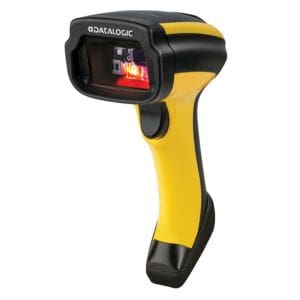
Datalogic Powerscan barcode scanner

Datalogic’s Powerscan handheld industrial barcode scanners are ready for tough, demanding environments. There are a variety of scan ranges and features.

Datalogic Wearable Computers

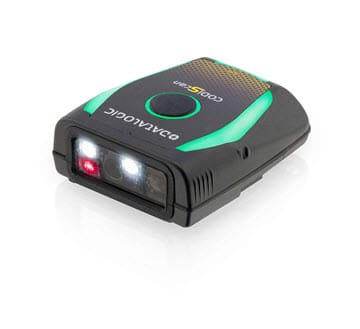
Datalogic CODiScan wearable computer

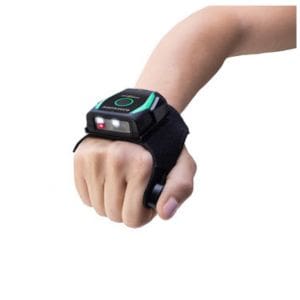
The Datalogic CODiScan wearable scanner is a game-changer in the hand-worn scanner market. Check out our write-up, and contact CSSI for an in-person demo.

Contact CSSI for Datalogic Sales and Support

Need help with your next mobile computing or data capture project? Please contact CSSI for help with Datalogic equipment sales and technical support. Our team of experienced consultants and mobility engineers are available to help.

What is the Optimal Vehicle Computer for Your Operation?

Seeking to equip your forklifts or jockey trucks with computers? You’ll likely find yourself evaluating traditional fixed vehicle-mounted computers vs tablets. How to decide?

As discussed in the article “ Should I Be Replacing My Fixed Vehicle Computers with Grab-and-Go Rugged Tablets” , fixed-mount vehicle computers have been a supply chain and warehouse industry standard for many years, and have proven reliable and effective. However, ongoing improvements in tablet PCs justify their consideration as an alternative in some, but not all, situations.

We have taken a look at some of the primary differences and relative benefits between the 2 options for forklift applications.

Top Advantages of Vehicle Mounted Computers

The most significant advantage of the vehicle-mounted computer is that it was purposefully designed to excel at the task of computing on a forklift or jockey truck. This means that it can tolerate vibrations and bumps, which may over time render less-rugged computers inoperable. A vehicle mount computer is powered directly from the vehicle battery, meaning the computer will be available for 24/7 use.

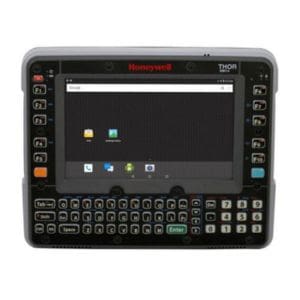
Honeywell Thor VM1A Vehicle Mounted Computer

Also, a vehicle mount terminal can handle unique requirements, such as use within a freezer warehouse or refrigerated warehouse… special screens and screen defrosters will keep your forklift operator team on task. Also, special screens are available for use when users have gloved hands.

Long-term heavy usage tends to wear out commonly used components, such as keys and buttons. VMUs such as the Honeywell VM1A feature field-replaceable bezels, which enable you to swap out damaged keyboards without removing the computer from the forklift!

The purpose built computers are available with both Windows and Android operating systems.

Top Advantages of Rugged Tablet PCs

Portability is the most significant advantage of the rugged tablet PC when compared against a fixed-mount computer. Vehicle mount tablets can be docked on the forklift for typical mobile workflows, but can also be undocked and used independent of the vehicle. This can help the company reduce the number of devices required, as the tablet can replace the need for a separate handheld device.

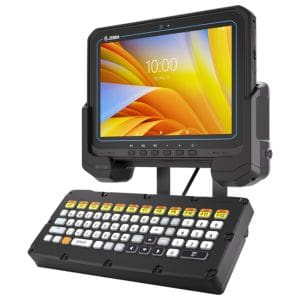
Zebra ET60 Tablet and Vehicle Mount Computer

While traditionally tablets were not rated for forklift use, there are today tablets available which are certified for this purpose. For example, Zebra’s ET60 rugged tablet PC, which features a specially designed mount which absorbs vibration and protects connectors.

There are rugged tablet options available with both Windows and Android operating systems, and a ruggedized tablet can be configured with a keyboard when necessary.

Factors Which Tend to Advantage a Vehicle Mounted Computer

Tablets may be the best choice in light-duty warehouses, when LTE connectivity is needed, and especially when workflows will benefit from a device which can be removed from its mount and used independent of the forklift. However, there remain a number of factors which, if present, tend to favor vehicle mounted computers as the better choice:

  • Vehicles are always used within a wifi environment, and cellular access is not required
  • A keyboard interface is needed
  • The vehicle will operate in a freezer environment
  • The vehicle will experience extreme shock and vibration
  • The cost of switching out mounts and power harnesses would be extreme
  • Vehicles must be washed down with the mount system

CSSI Can Help You Choose Between Tablets and Vehicle Mounted Computers

The team at CSSI is very experienced with both vehicle mounted computers and rugged tablet PCs . We would be happy to have a conversation with you about your specific workflows and usage environment. Our team can help you select the ideal rugged devices, and schedule an on-site demo and trial period as well. Please contact CSSI to start a discussion of vehicle-mounted computers.

Q: Do we need WiFi-only coverage or cellular (LTE) connectivity for our forklift fleet?
A. This is one of the first questions to settle, because it often decides the answer on its own. If your operation runs entirely on warehouse WiFi, a vehicle-mounted computer is generally the simpler, more cost-effective fit. If forklifts move between buildings, yard areas, or sites without continuous WiFi coverage, a rugged tablet with LTE gives you connectivity a mounted unit can’t. Also consider CBRS / private cellular, which is an increasingly attractive option providing advantages for many larger facilities.

Q: Will these devices actually hold up in a freezer, cold storage, or washdown environment?
A. Vehicle-mounted computers are purpose-built for these conditions, with defroster-equipped screens, gloved-hand touch compatibility, and washdown-rated housings available. Rugged tablets have closed some of that gap, but for continuous freezer operations or regular washdown protocols, a mounted system is still the more proven choice.

Q: What’s the real total cost of ownership, beyond the sticker price of the device itself?
A. Look past the unit cost to the mounting hardware. Vehicle-mounted computers require a permanent mount and power harness, and replacing those after a collision or vehicle swap adds cost over time. Tablets use a docking and vibration-absorbing mount, which is typically less expensive to replace and lets the same device move between vehicles, potentially reducing how many units you need to buy in the first place.

Q: Can a rugged tablet really survive forklift-level vibration and shock?
A. Standard consumer or light-duty tablets can’t, but purpose-built rugged tablets designed for vehicle mounting (such as the Zebra ET60) are now certified for this use when paired with a vibration-absorbing mount. For extreme shock and vibration environments, or applications where long-term durability under constant jarring is the top priority, a vehicle-mounted computer still has the edge.

Q: Do we have to standardize on one device type across the whole fleet?
A. No. Many operations run a mixed fleet: vehicle-mounted computers on forklifts in freezer zones, washdown areas, or WiFi-only sections, and rugged tablets on units that need portability or LTE. Because the right choice depends on the specific forklift’s environment and workflow, CSSI evaluates each application individually and can set up a trial before you commit to either option fleet-wide.

Load Windows 10 / Windows 11 on a Handheld Computer? Yes It’s Possible!

It’s well-known that the Android OS has become the default standard for mobile computers. Ongoing improvements in Android and Microsoft’s elimination of the Windows Mobile and Windows CE operating systems have resulted in market consolidation around excellent rugged devices built to run Android.

But what if your mobile application requires the Windows Operating System?

Until now, if you had a critical mobile app built to run on Windows, your best options were to either a) rewrite the application to run on Android, or b) rewrite it as a web application which can run in the browser on the handheld device. These are common approaches, and CSSI can help with these rewrites through our custom programming services. However, what if a software rewrite is not feasible?

Mobile Device Options Running Microsoft Windows (full-version or IOT)

We are happy to let you know that we now have options for a rugged handheld which can run either full-blown Microsoft Windows operating system, or Windows IOT Enterprise. CSSI’s partner DT Research offers models which are tough, enterprise-grade, and ready to handle your Windows applications.

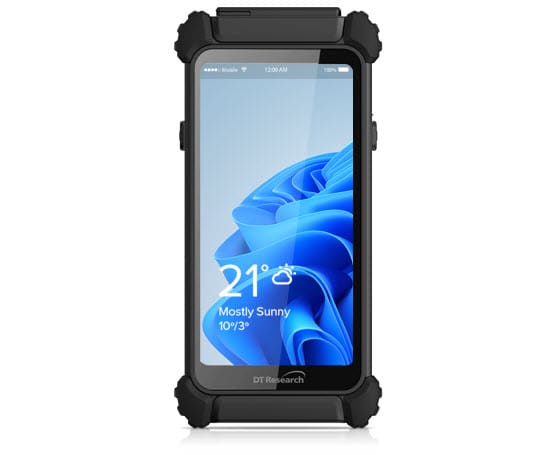
DT Research DT362GL Windows Handheld Computer

This rugged yet slim handheld PC boasts a 6″ capacitive touch screen, and high-performing Pentium processor. Select from a range of accessories such as a back camera, barcode scanner, or RFID reader. It is IP65 rated, so ready for harsh use environments.

DT Research Model DT362GL handheld computer with Microsoft Windows OS

Mobile Device Features include:

  • 6″ touch screen
  • Intel Pentium
  • IP65
  • Optional camera, RFID reader, and barcode scanner!

DT Research DT362DN Windows Handheld Computer

The DT362DN boasts an Intel Core processor, with a touchscreen capable of digital pen support. A hot-swappable battery pack makes it a great choice for always-on environments. Choose your accessories – back camera, barcode scanner (close or long range), and a GPS module.

DT Research Model DT362DN handheld computer with Windows OS

Handheld Device Features:

  • 6″ touch screen
  • Intel Core
  • IP65
  • Hot-swappable battery
  • Optional camera, RFID reader, and mid- or long-range barcode scanner!

DT Research 362MD Windows Medical Computer

This handheld PC is certified and ready for medical applications. Critical ES60601-1 certification is in place, and the antimicrobial enclosure assist in keeping the device sanitary. A bright capacitive touch screen makes this a tool which healthcare professionals will love for monitoring and recording patient information in a Windows application or environment.

DT Research Model 362MD handheld medical computer with Windows OS

Mobile Device Features include:

  • ES60601-1 healthcare use certified!
  • Antimicrobial enclosure
  • 6″ touch screen
  • Intel Pentium
  • IP65
  • Optional: RFID reader, barcode scanner!

Contact CSSI for Handheld Devices Running Microsoft Windows OS

The CSSI team are experts in rugged mobile computers. Does your application or workflow require a handheld computer running Microsoft Windows? Contact CSSI to speak with one of our consultants about your project. We can arrange a demo of handheld computers or tablets running either Windows or Android. We’ll help you determine the best fit for your business. Please contact CSSI to discuss Windows rugged handhelds.

Q: Our current handhelds run Windows CE or Windows Mobile — are we forced onto Android when we replace them?
A. No. While Microsoft retired Windows CE and Windows Mobile, it didn’t retire Windows on handheld hardware. Devices like the DT362GL and DT362DN run full Windows 10/11 or Windows 10/11 IoT Enterprise, which means a fleet coming off legacy Windows Embedded devices can move to modern rugged hardware without rewriting existing Win32 or .NET applications. Android is still the right call for many deployments, but it isn’t the only upgrade path — and for teams with a large investment in Windows-based line-of-business software, staying on Windows avoids a costly re-platforming project.

Q: Is Windows 10 even still supported? We don’t want to standardize on hardware that’s already outdated.
A. It depends on which edition. Mainstream Windows 10 (Home/Pro/Enterprise) reached end of support in October 2025, but Windows 10 IoT Enterprise LTSC 2021 — the edition built for fixed-function and mobile hardware — is supported by Microsoft through January 2032. Windows 11 IoT Enterprise LTSC extends that runway further. When evaluating a Windows device, ask specifically whether it ships with a standard consumer/Pro build or an IoT Enterprise LTSC image — that distinction determines how many years of security updates you’re actually buying.

Q: What warehouse or logistics scenarios actually require Windows instead of Android?
A. It is often (mistakenly) thought that terminal emulation users (many WMS, ERP, and mainframe-connected systems ) require Windows. This is actually incorrect – CSSI has solutions which can very quickly get a TE application running on a modern Android device without having to touch your complex backend software. Beyond that, however, Windows tends to win out when a deployment depends on specialized peripheral drivers (label printers, RFID readers, vehicle-mount scanners, diagnostic tools) that vendors only certified for x86/x64 Windows, or on desktop-class software (CAD viewers, engineering tools, some EMR/patient-monitoring platforms) that has no Android equivalent. If your workflow is app-based and cloud- or browser-delivered, Android is usually the simpler, lower-cost choice.

Q: How do we manage and secure Windows mobile computers across a distributed fleet compared to Android?
A. Windows devices join the same Active Directory domain and Group Policy structure your desktops already use, and can be managed through the same SCCM or Intune console your IT team is likely already running — which means less new tooling and less retraining for your help desk. Android fleets are managed differently, typically through an EMM platform using Android Enterprise. Neither approach is more “secure” by default; the deciding factor is usually which management stack and skill set your IT team already has in place.

Q: If we mix Windows and Android devices in the same fleet, does that create more work for IT?
A. It adds a second management platform, but it’s a common and manageable setup — some companies run Android for general scanning and mobility tasks while keeping Windows on the subset of roles (data entry stations, workstations tied to legacy ERP, specialized equipment) where a Windows-only application is non-negotiable. The key is scoping Windows to where it’s actually required rather than standardizing the whole fleet on it by default, which keeps both the device cost and the management overhead in check.

Trade-In Old Mobile Devices and Earn Zebra Rebate

Zebra has announced a trade-in program for 2024. The Go Zebra program allows customers to earn rebate cash when trading in used mobile devices, scanners, and label printers for new Zebra equipment purchases. Rebates vary by product, but can significantly defray your cost when upgrading to new devices.

Some examples of rebates which can be earned, when trading in:

  • Trade in MC9300 mobile computer, earn $150
  • Trade in MC3300x mobile computer, earn $200
  • Trade in L10/ET60/ET65/ET80/ET85 tablet pc, earn $100
  • Trade in TC52 handheld computer, earn $75
  • Trade in ZT620 printer, earn as much as $550

Contact CSSI for help with your Zebra Trade-Ins and Upgrades

CSSI can assist you in completing the necessary rebate paperwork to ensure you receive your cash back from Zebra. Please contact us to discuss your Zebra device upgrades.

Rebates are available for a broad range of products (and are available for competitive products as well). The full list of rebates is available here:

Q: How can a trade-in rebate help us upgrade our frontline workers’ mobile devices when budgets are tight?

A. A trade-in rebate lowers the net cost of new Zebra mobile computers, tablets, scanners and printers by giving you cash back for the older equipment you retire. You can put those savings toward more devices, better accessories, or support and software that would otherwise be cut from the project. That way a phased refresh doesn’t have to wait for the next budget cycle, and more of your edge employees get current tools sooner.

Q: Do our old devices have to be Zebra products to qualify?

A. No. The Go Zebra program accepts eligible competitive products as well as older Zebra models. That matters if your fleet is a mix of brands picked up over the years. Trading in non-Zebra handhelds, scanners or label printers can bring your operation onto a single platform. One platform is easier for IT to deploy, secure and manage, and your workers only have to learn one set of devices.

Q: How much can we expect to receive for the devices we trade in?

A. Rebate amounts depend on the new Zebra product you buy. Some examples: $75 toward a TC52 handheld computer, $100 toward several Zebra tablets, $150 to $200 toward MC9300 and MC3300x mobile computers, and up to $550 toward a ZT620 industrial printer. Across a large fleet of scanners, handhelds or printers, those savings add up fast. CSSI can review your installed base and estimate your total rebate before you commit.

Q: Beyond cost savings, what operational benefits come from replacing older mobile devices?

A. Aging devices often run operating systems that are no longer supported, which creates security risks and compatibility problems with your WMS, ERP or other enterprise applications. Newer Zebra devices offer faster processors, better scanning performance, longer battery life, stronger Wi-Fi and cellular connectivity, and longer security update lifecycles. On the floor, that means fewer scan failures, less downtime, faster picking and receiving, and fewer devices waiting on repair. Those gains add up to better throughput and accuracy across the shift.

Q: What’s involved in taking part in the program, and how does CSSI help?

A. CSSI works with you to find which of your current devices qualify and match them to the right new Zebra products for your environment, whether that’s a warehouse, cold storage, manufacturing, or transportation and logistics. We also complete the rebate paperwork so you get your cash back from Zebra. Beyond the rebate, CSSI can help with device staging and configuration, rollout planning, and ongoing support, so your IT team isn’t carrying the upgrade alone.

Hands-Free Barcode Scanning with the CODiScan Bluetooth Wearable

Wearable scanning devices are a proven way to boost employee productivity in high speed warehouse environments. Datalogic has now introduced the CODiScan bluetooth wearable scanner, which is a light yet powerful hands-free barcode scanner for your warehouse team. The CODiScan can pair with any mobile computer via Bluetooth. Worn on the back of the hand, or as a pendant, this Datalogic device allows the user to retain use of his or her hands while quickly triggering scans with an ergonomic thumb trigger.

Datalogic CODIScan Wearable Scanner

Datalogic CODiScan Wearable Scanner Features

  • Light-weight (just 44 grams) and comfortable for full-shift use
  • 1D/2D barcode scanning capabilities with Datalogic’s intelligent aiming technology
  • Easy to use and manage, pairs with mobile computer via Bluetooth
Datalogic CODIScan Wearable Scanner hands free

Applications for the Datalogic CODiScan

A wearable scanner like the CODiScan is able to boost productivity in any high-speed picking environment. Seconds saved in each scan (versus repeatedly picking up and putting down a handheld scanner) add up to massive worker output gains over the course of a day. Common applications are in warehouse management (picking, packing, shipping, receiving), retail (order fulfillment, receiving), and manufacturing (inventory management, verification of finished goods).

Datalogic CODIScan Wearable Scanner solo view

Demo the Datalogic CODiScan Wearable Scanner

Let’s discuss your application for the CODiScan wearable barcode scanner. Datalogic scanners are well-known for their durability and quality. CSSI’s barcode solutions team can arrange a hands-on demo for you to try this powerful barcode scanner within your operation. Please contact us to get a good look at the CODIscan.

Q: What is the Datalogic CODiScan, and where does it fit in my operation?

A. The CODiScan is a lightweight Bluetooth wearable barcode scanner built for hands-free scanning. It’s designed for warehouses, distribution centers, e-commerce fulfillment, and intralogistics. It also suits retail inventory and shelf replenishment, and manufacturing tasks such as work-in-process (WIP) tracking, traceability, and quality control. If your associates scan all day while picking, packing, or handling material, the CODiScan lets them keep both hands on the job.

Q: How does a wearable scanner improve my team’s productivity?

A. The CODiScan weighs only 44 g (1.5 oz), so workers can wear it on the hand, around the neck, on a belt, or in a pocket. Workers don’t have to pick up and set down a handheld device for every scan. Keeping both hands free speeds up picking, packing, and put-away and reduces wasted motion across a shift. The fully adjustable hand trigger makes scanning feel natural, and because the trigger is separate from the scanner, the glove can be washed easily.

Q: Will the battery last through my shifts?

A. Yes. The CODiScan is rated for two full shifts on one charge, or up to 12,000 scans. A full charge takes about two hours, and you can add more charging options as your fleet grows. That makes it practical for multi-shift operations without keeping spare devices on hand.

Q: How do workers know a scan was successful in a busy, noisy warehouse?

A. The CODiScan gives immediate good-read feedback in several ways. Three high-visibility LED blades show status across up to 180 degrees, so the worker can see it without turning the wrist. It also uses audible signals and Datalogic’s Green Spot technology, which projects a green dot onto the barcode to confirm a good read. The Smart Scanning System includes an aimer that reaches up to 1.5 m (4.9 ft) for accurate targeting.

Q: How does the CODiScan connect to our existing devices and systems, and which model should we choose?

A. The CODiScan connects over Bluetooth. The included Aladdin app handles pairing and configuration with Android mobile computers. For fixed workstations, Gateway Connect can pair up to seven CODiScan units with a fixed computer. There are three models to match your barcodes and scanning distances:

  • HS7600SR (Standard Range): for general-purpose scanning
  • HS7600MR (Mid-Range): for longer reach
  • HS7600RT (Short Range High Density): for small, dense codes common in manufacturing and electronics

Your RFID Project Success Plan

It’s important to think of RFID as a system, rather than simply as discrete components such as an antenna or an RFID tag. Successful RFID (radio frequency identification) projects consider each necessary aspect of the system, any one of which could otherwise become a weak link which causes failure.

RFID tags are useless on their own, as are antennas or handheld readers. And without middleware to ingest and process tag data, any information provided by your tags may be unusable.

We created this brief overview describing the important components of most RFID systems.

Critical Elements of an RFID System

RFID ConsultantYour RFID Consultant is an essential part of your RFID success plan! A knowledgeable expert from CSSI will provide technical support and help you navigate the mix of tag testing, hardware selection, software, and process definition needed to achieve a successful RFID implementation.
RFID TagsRFID Tags (or RFID labels) are the simplest yet most critical element of your project. You must ensure that tags can be successfully read within your environment – this is affected by your choice of passive RFID tags or active RFID tags, and also by the nature of the item you are tracking and its environment.
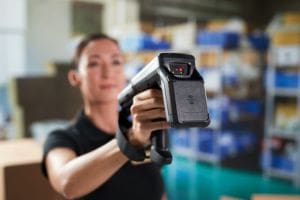
Handheld RFID ScannerRFID Reader – Handheld: Handhelds are ideal for locationing and search type applications such as RFID asset tracking. Users can carry the handheld with them to scan for desired tags.
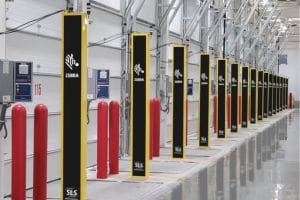
Zebra RFID PortalsRFID Readers – Fixed: Are utilized in applications where passive background reading is desired, either at a portal or within a certain area. Readers control RFID antennas, which will be configured and angled to achieve desired read range.
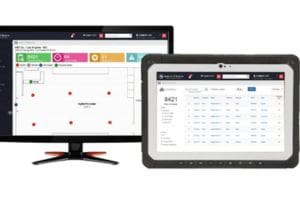
RFID Middleware SoftwareRFID Middleware (software) is the critical base station… software which ingests data from the RFID readers, and presents it in a way which enables you to make business decisions. This RFID application can be an end-destination for your data, or can be configured to connect with your ERP or inventory system.
Your ERP SystemERP or Inventory System Integration enables you to import and export data to your middleware. This enables you to update your inventory, or add critical location and count information in your system of record.
Zebra RFID tag printerRFID Printer: Necessary when you intend to print RFID labels on-demand in your facility. This enables you to print unique and changing data to the RFID tag. (You can also purchase pre-printed passive RFID tags from outside sources if there is not a need to make adjustments to tag content).
Your Defined ProcessYour Defined Process is critical… RFID technology is at heart just another method of data capture. Having a well thought-out process will enable you to create reliable and repeatable results. We put this last on our list, but it really should be the first item you address, as it will benefit you regardless of the method of data capture.

More Content on RFID Systems and RFID Technology

If you found this overview helpful, you may wish to check out some of our other RFID technology content:

Contact CSSI to Discuss Your RFID Solution

Do you have a great potential RFID application within your business? Our team at CSSI would love to speak with you about your project. We can help you reach your end goal faster. Please contact us to discuss RFID today.

Q: We already use barcodes. What does RFID do that barcode scanning can’t?

A. Barcodes need a direct line of sight and are scanned one at a time. Passive UHF RFID tags can be read without line of sight, through cartons and shrink wrap, and many at once. A single pass of a handheld reader, or a pallet rolling through a dock-door portal, can capture dozens or hundreds of tags in seconds. That makes RFID a good fit for cycle counts, receiving and shipping verification, and tracking returnable containers or assets. Most operations keep using barcodes alongside RFID, and many RFID labels carry a printed barcode as a backup.

Q: Should we use passive or active RFID tags?

A. Most warehouse and distribution applications use passive UHF tags. They have no battery, cost little, and read reliably from a few feet up to roughly 30 feet depending on the reader and antenna. Active tags carry their own battery and transmit over much longer distances, which suits high-value assets, yard management, or real-time location tracking. They cost far more per tag and need battery maintenance. If you’re tracking cases, pallets, or inventory, passive is almost always where to start.

Q: Why do our products and environment matter so much when choosing tags?

A. Radio signals behave differently around different materials. Metal reflects RF energy and liquids absorb it, so a standard label that works on a cardboard case may fail on a steel drum or a bottle of product. Cold storage, freezers, condensation, and rough handling also affect adhesives and read performance. This is why tag testing on your actual products, in your actual facility, should come before any purchase. Specialty tags exist for most of these problems, including on-metal tags, freezer-grade adhesives, and ruggedized hard tags.

Q: Which parts of an RFID system will we need, and how do they work together?

A. A working system usually includes:

  • Tags or labels on the items you want to track
  • An RFID printer to encode and print labels on demand
  • Handheld readers for searching, locating, and cycle counting
  • Fixed readers and antennas at dock doors, conveyors, or portals for automatic reads
  • Middleware to filter raw read data into meaningful events
  • An integration that passes those events to your WMS, ERP, or inventory system

None of these pieces delivers value alone. The software and integration layer is what turns tag reads into updated inventory records and business decisions.

Q: What is the best way to get started without taking on too much risk?

A. Begin with a clearly defined problem, such as slow cycle counts, shipping errors, or lost returnable assets, and map the current process before choosing hardware. Next, run a focused pilot in one area or on one workflow. Test tags on real products, confirm read rates, and measure results against your baseline. A pilot shows you the ROI, surfaces integration issues early, and gives you a proven model to scale across the facility. Working with an experienced RFID partner through site assessment, tag testing, and integration can save a lot of trial and error.

New Zebra Wearable Computers and Scanners

Zebra Technologies has announced several new additions to its line of wearable computers and wearable barcode scanners for 2024. Wearable computers enable higher worker productivity in fast-moving warehouse environments, supporting operations such as picking and putaway. Wearables keep the user’s hands free and reduce time spent picking up and putting down a handheld computer. Time studies document the benefits of hands-free operations in these environments.

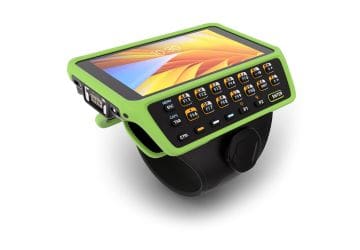
The new mobile computer launches include 2 arm-worn computers which work in tandem with ring scanners or wearable scanners, as well as an innovative new wearable scanner, the RS2100, which is the lightest enterprise scanner available today.

New Zebra Wearable Products for 2024

Zebra WT6400 Wearable ComputerThe Zebra WT6400 Wearable Mobile Computer maximizes utility and computing power, with an optional keypad and features to power hands-free picking operations. Android OS. This updates prior products such as the WT6300 wearable computer.
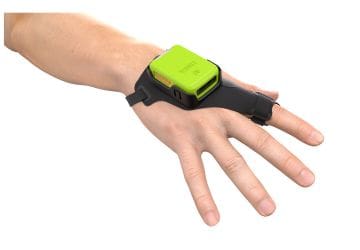
Zebra RS2100 Wearable Barcode ScannerThe Zebra RS2100 Wearable Scanner is the world’s smallest and lightest enterprise-grade wearable barcode scanner. The light design creates maximum comfort for users, while maintaining enterprise class wearability and offering a great scan engine.
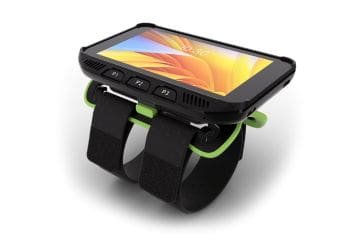
Zebra WT5400 Wearable ComputerThe Zebra WT5400 Wearable Mobile Computer is a new lower-cost yet purpose-built wearable computer packed with innovations to support hands-free picking. Android OS.

Other prior releases which remain available in the popular Zebra wearable line include the WS50 Android Wearable Computer and the RS6100 Bluetooth Wearable Scanner.

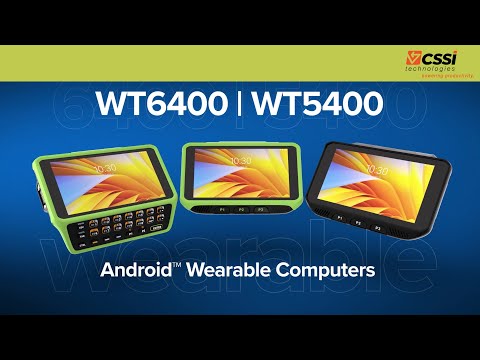
YouTube player

Learn More About the Benefits of Industrial Wearable Computing

To learn more about how wearable computers and scanners can improve worker productivity in your warehouse management workflows such as picking or inventory management, please see our prior articles Why Wearable Scanners for the Warehouse? and Warehouse Wearables: How Wearable Technology Boosts Worker Productivity

Schedule a Demo of Zebra Technologies Wearables

Get started with exploring the fit of wearable computers and barcode scanners in your business by speaking with CSSI. Our Zebra experts can assess your workflows and show you how wearable computers can be of benefit to your team. Please contact us to learn more about wearable computers.

Q: What’s the difference between the Zebra WT6400 and the WT5400, and how do I choose?
A. Both are Android wrist-mounted computers built for hands-free picking. They share the same main hardware: a 4.7-inch Gorilla Glass touchscreen that works when wet or with gloves, a Qualcomm octa-core processor, 6 GB RAM and 64 GB of storage. Zebra also lists both with Android support through Android 17. The WT6400 is the flagship that replaces the WT6300. It adds more features, such as an optional keypad attachment and push-to-talk voice. The WT5400 is the lower-cost choice for operations that just need solid hands-free picking. Choose the WT6400 if your workflows involve voice, heavy data entry or the most demanding environments. Choose the WT5400 if cost per worker matters most.

Q: Which ring or hand scanner should we pair with a wearable computer?
A. Both the WT6400 and WT5400 work with Zebra’s Bluetooth wearable scanners: the RS2100, RS5100 and RS6100. You pair a scanner by tapping it against the computer (NFC). The RS2100 weighs just 1.1 oz and sits on the back of the hand, leaving the palm free. It reads 1D and 2D barcodes, which makes it a good fit for high-volume picking where comfort over a long shift matters. The RS6100 is a more modular scanner for tougher scanning jobs. The WT6400 also supports corded scanners (RS4000 and RS5000) if you don’t want to rely on Bluetooth.

Q: Will these devices hold up in our freezers, on concrete floors and through a full shift?
A. The WT computers are tested to survive 6-foot drops onto concrete. They are sealed to IP65, or IP67 with the battery installed, so they resist dust and water. The WT6400 is also rated for 1,000 tumbles. For power, you can choose a standard 3,500 mAh battery or an extended 5,000 mAh battery. The batteries are hot-swappable, so workers can change them without shutting down or losing their session. For cold storage, the WT6400 with the extended battery is rated down to -22°F. Temperature is the main thing to check before you buy. The RS2100 is only rated down to 32°F, so it isn’t suited to freezer work. Ask us which scanner fits your freezer or cold-storage areas.

Q: How do these devices fit into our Wi-Fi network and IT management tools?
A. The WT6400 supports Wi-Fi 6E on the 2.4, 5 and 6 GHz bands, which helps in crowded RF environments and gives you room to grow. Because the line runs on Android, IT teams can use the same mobile device management (MDM) platforms and Zebra software tools they already use for Zebra handheld computers. That makes enrollment, security updates and app deployment consistent across all your devices. Long Android OS support also means a longer usable life, which lowers total cost of ownership.

Q: Where does the Zebra WS50 fit in, and is it still available?
A. Yes, the WS50 is still part of Zebra’s lineup, along with the RS6100 scanner. The WS50 is a very compact all-in-one Android computer with a built-in scanner. There’s no separate scanner to pair or charge. It can be worn on the wrist, on the back of the hand or on a hip mount. This makes it a good choice where you want the smallest possible device per worker, such as light picking, store replenishment or roles where a full wrist computer would be too much. If your workers need a larger screen for data entry or a separate high-performance scanner, a WT6400 or WT5400 paired with an RS-series scanner is the better fit.

Have you considered wearable scanners for your warehouse? Many companies have discovered the benefits that a wearable barcode scanner or mobile computer can add in a warehouse environment, enhancing efficiency, picking accuracy, and safety. Wearable technology and mobile barcode printers can be a productivity game-changer for fast-paced warehouse operations!

Key Benefits of Wearable Scanners in Warehouse Operations

  1. Hands-Free Operation: Wearable scanners allow workers to keep their hands free while performing tasks such as picking, packing, and inventory management. This hands-free operation increases productivity as workers can handle items more efficiently without having to constantly pick up and put down a handheld scanner. Saving a few seconds per scan operation adds up to significant time savings in the course of a busy day!
  2. Increased Efficiency: With wearable scanners, workers can scan items more quickly and accurately. They can simply point the scanner at the barcode or QR code without needing to align a handheld scanner with the barcode. This streamlined process speeds up operations such as inventory management, order picking, and shipping/receiving.
  3. Real-Time Data Capture: Wearable scanners enable real-time data capture, providing immediate visibility into inventory levels, order status, and warehouse operations. This real-time data allows managers to make informed decisions quickly, optimize workflows, and respond promptly to changes in demand or supply chain disruptions.
  4. Reduced Errors: Wearable scanners help minimize errors in inventory management and order fulfillment. By eliminating manual data entry and reducing the risk of misreads or missed scans, wearable scanners improve accuracy and reduce the likelihood of shipping errors, stockouts, and overstock situations.
  5. Improved Ergonomics and Comfort: Unlike handheld scanners, which can be cumbersome and lead to repetitive strain injuries with prolonged use, wearable scanners are designed to be lightweight and ergonomic. They are typically worn as a back-of-hand scanner, ring scanner, or on a pendant. This ergonomic design enhances worker comfort and reduces fatigue during long shifts.
  6. Integration with Warehouse Management Systems (WMS): Wearable scanners can be seamlessly integrated with WMS and other enterprise systems, allowing for automated data capture and real-time synchronization of inventory and order information. Integration with WMS enables better tracking of inventory movements, improves order accuracy, and facilitates efficient replenishment processes.
  7. Enhanced Safety and Compliance: Wearable scanners can incorporate features such as voice commands, augmented reality (AR) guidance, and proximity sensors to enhance worker safety and compliance with warehouse protocols. For example, AR-enabled smart glasses can provide hands-free navigation instructions and safety alerts, reducing the risk of accidents and injuries in the warehouse environment.

Wearable Scanners for the Warehouse Keep Getting Better

There was a time several years ago when wearable ring scanner options were not optimal. The highest-quality solutions were prohibitively expensive, form factors were not ideal, scanners were inflexible, and battery life was poor. However, times have changed. Today, CSSI can offer multiple wearable scanners which boast long batter life, powerful scanners, and easy-to-use form factors which make it a breeze to outfit the warehouse team. The typical warehouse worker appreciates these work-simplifying products, which further assures great adoption rates. Today, wearable tech can include products that function as a barcode reader, mobile computer, and even as a mobile printer.

How To Get Started With Wearables for Your Warehouse

Wearable tech offers numerous benefits in a warehouse environment, including hands-free operation, increased efficiency, real-time data capture, reduced errors, improved ergonomics, seamless integration with WMS, and enhanced safety and compliance. By leveraging wearable scanners, warehouses can optimize their operations, improve productivity, and maintain a competitive edge in today’s fast-paced logistics industry.

The best way to explore wearable scanners for the warehouse operation is to schedule a conversation with the team at CSSI. Our consultants can make recommendations based on your workflows and usage environment. Please contact us to get started with wearable scanners.

Q: How quickly can a warehouse expect a return on its investment in wearable scanners?

A. Payback depends on scan volume, labor costs, and how many touches each order requires, but high-volume picking and packing operations usually see it soonest. Savings come from three places. Workers save a second or two on every scan because they no longer pick up and put down a handheld. Fewer picking errors means lower costs for returns, re-shipping, and chargebacks. Fewer repetitive-strain complaints can also help. To estimate your own ROI, multiply the scans per worker per shift by the time saved per scan, then add your current cost of errors. A short pilot in one zone is the most reliable way to confirm the numbers before a full rollout.

Q: Will wearable scanners work with our existing WMS and mobile computers?

A. In most cases, yes. Ring and back-of-hand scanners, such as the Zebra RS5100 and RS6100 and the Honeywell 8680i, pair over Bluetooth with the Android mobile computers or wearable computers you already use. Scan data goes into your WMS application just as it would from a handheld’s built-in scanner, so you usually don’t need to change the software. Wrist-mounted wearable computers like the Zebra WS50 run Android and can host your existing WMS client or a terminal emulation session. An integration partner can check your current devices, OS versions, and applications for compatibility before you buy.

Q: Can wearable scanners stand up to a full shift and harsh environments like cold storage?

A. Enterprise wearables are built for industrial use, with sealing against dust and water, drop and tumble ratings, and operating ranges that include freezer conditions for models designed for cold storage. Batteries are typically hot-swappable, so a worker can change batteries mid-shift without re-pairing or losing data. For multi-shift or freezer operations, plan for spare batteries and multi-slot chargers, and pick models rated for your lowest temperatures and for gloved use.

Q: How hard is it to get workers to adopt wearable scanners?

A. Adoption tends to be easy because the scanner simplifies the job rather than adding steps. Most workers are comfortable after a short training session, since triggering a scan with the thumb or index finger quickly feels natural. The things that matter most are proper fit (offer adjustable straps and triggers for either hand), hygiene (use replaceable or washable straps when devices are shared), and involving floor leads in the pilot so they can champion the change. Feedback from early users also helps you refine workflows before a wider launch.

Q: What should IT consider for device management and security?

A. Wearable scanners and wearable computers should be managed like the rest of your mobile fleet. Android-based wearable computers can be enrolled in your mobile device management (MDM) or EMM platform to handle app deployment, OS updates, lockdown, and remote troubleshooting. Manufacturer tools such as Zebra’s StageNow and Honeywell’s Operational Intelligence make staging and monitoring easier. For Bluetooth ring scanners, set up a quick, consistent pairing method (such as scan-to-pair or tap-to-pair) and track battery health across the fleet. Also confirm that the devices support your Wi-Fi security standards, and include wearables in your lifecycle and repair planning, ideally with a service contract that covers accessories and batteries.

Zebra Technologies TC53e/TC58e Handheld Computer Announced

Zebra has announced the latest update to its popular ‘TC’ line of handheld touch computers . The Zebra TC53e (Wi-Fi only) and TC58e (Wi-Fi and cellular) improves on the TC53/TC58 models.

The TC53e and TC58e are more than a modest update. Zebra has implemented an updated form factor and quite a few new features which will be appreciated by users.

New Features: Power and Protection For Mobile Computing

The Zebra TC53e mobile computer and its partner TC58e are packed with new features (see spec sheet below). Some of the highlights include:

  • Leaner mobile computer form factor for user comfort
  • Improved industrial barcode scanner: Option for powerful, longer-range SE4770 scan engine – ideal for T&L applications
  • Rugged design makes it more durable – 8 foot drop spec when used with rubber boot
  • Face recognition for faster, more secure device log-in
  • Model with short-range RFID scanning will be available!

Schedule an In-Person Demo of the Zebra TC53e / TC58e

Contact CSSI to schedule a hands-on demo of the TC53e or TC58e mobile handheld computer line from Zebra Technologies Corp. With improved performance and integrated barcode scanner, it’s a great choice. We can help you evaluate the impact that this powerful Zebra mobile computer can have on your operation!

Q: What’s the difference between the Zebra TC53e and the TC58e?

A. Both are 6-inch rugged Android handhelds built on the same platform. They share the Qualcomm 4490 octa-core 2.4 GHz processor, Wi-Fi 6E, Bluetooth 5.3, and the same scanning and battery options. The difference is cellular. The TC53e is Wi-Fi only, so it suits workers who stay inside a building with good wireless coverage. The TC58e adds 5G and LTE through one nano SIM and one eSIM, and it supports cellular voice, VoLTE, and VoIP. That makes it a better fit for yard, dock, delivery, and field staff who leave Wi-Fi range. If your team works only in the warehouse, the TC53e covers it. If they move between buildings or out on routes, choose the TC58e.

Q: Will these devices hold up on a busy warehouse floor?

A. Yes. Both models handle 8 ft. (2.4 m) drops to concrete with the protective boot. They also pass 1,000 consecutive 1.6 ft. (0.5 m) tumbles without the boot. They’re sealed to IP68, or IP65 with the battery installed, so dust, washdowns, and spills aren’t a problem. The 600-nit Gorilla Glass touchscreen works when wet and with gloves, which helps in cold storage and loading docks.

Q: Can one battery last a full shift, and what about multi-shift operations?

A. The standard battery is 4,680 mAh, and an extended 7,000 mAh battery is available for longer shifts or heavy scanning. Batteries are warm-swappable, so workers can change them without shutting down or losing their session. Both models support fast charging and wireless charging. PowerPrecision+ reports real-time battery health, which helps you remove aging batteries from rotation before they fail mid-shift.

Q: What scanning options are available for warehouse use?

A. You can choose from three scan engines: the SE4720, the SE4770, or the SE55 Advanced Range engine with IntelliFocus. The SE55 is the one to pick if workers need to read barcodes at close range and on high rack locations with the same device. There’s also a 16 MP autofocus rear camera for documenting damage or proof of condition, and an 8 MP front camera for video calls. For inventory-heavy operations, the TC53e-RFID variant reads up to 20 tags per second at a range of about 4 ft. (1.2 m).

Q: How do the TC53e and TC58e help with IT management, security, and long-term value?

A. Both models ship with Zebra DNA, Zebra’s suite of enterprise software for setting up, securing, managing, and optimizing devices across the fleet. Security credentials include FIPS 140-2 validation, Common Criteria certification, and Secure Element support. Zebra also offers Extended Future Android Support, so the devices can stay on supported Android versions for years. With Workstation Connect, a TC53e or TC58e can drive a full desktop-style workstation or POS setup, which reduces the need for separate PCs. Base configurations start at 6 GB RAM / 64 GB storage, with options up to 8 GB / 128 GB and microSD expansion up to 2 TB. The housing uses 25% post-consumer recycled plastic, which supports sustainability goals.