Have you considered wearable scanners for your warehouse? Many companies have discovered the benefits that a wearable barcode scanner or mobile computer can add in a warehouse environment, enhancing efficiency, picking accuracy, and safety. Wearable technology and mobile barcode printers can be a productivity game-changer for fast-paced warehouse operations!
Key Benefits of Wearable Scanners in Warehouse Operations
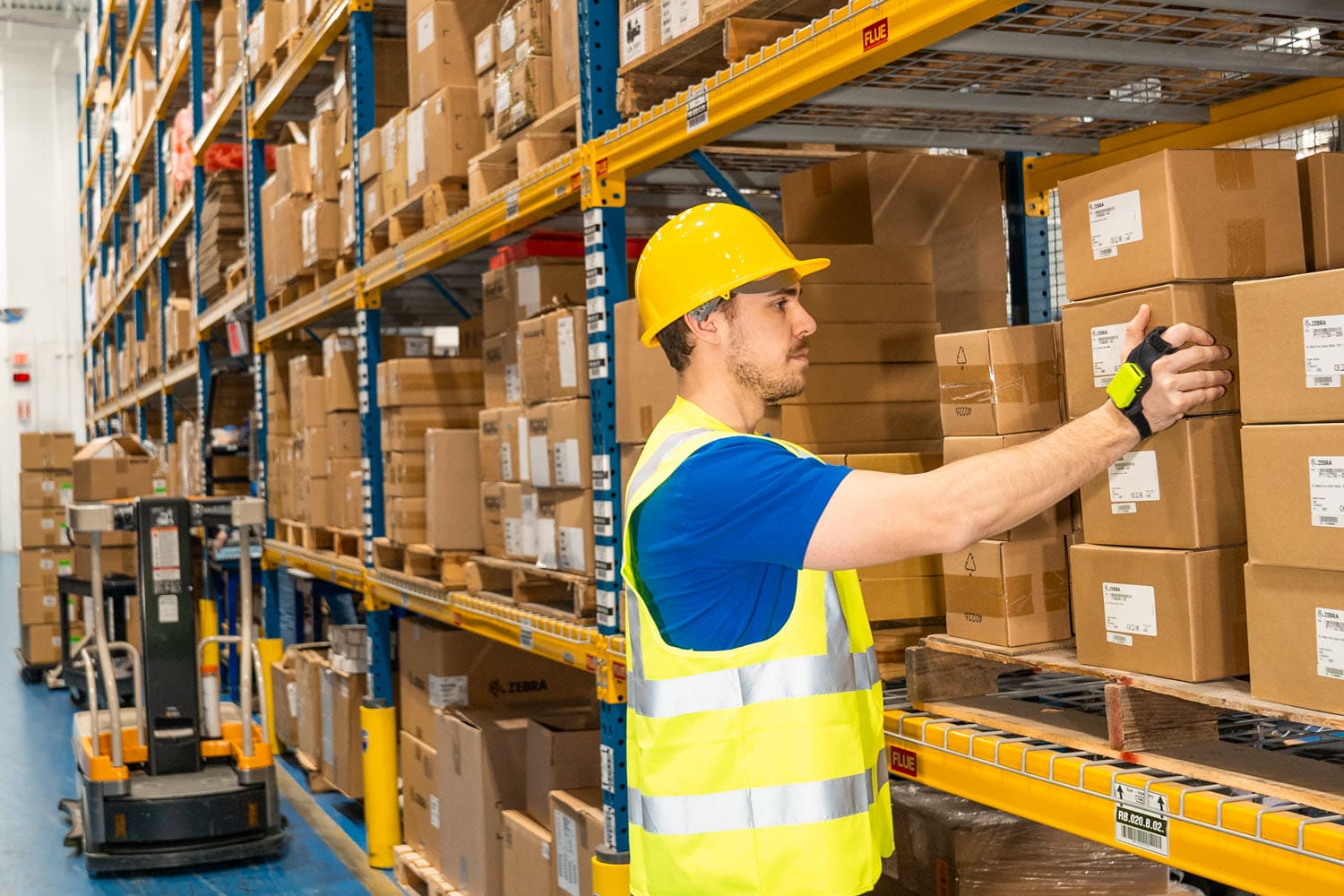
Hands-Free Operation: Wearable scanners allow workers to keep their hands free while performing tasks such as picking, packing, and inventory management. This hands-free operation increases productivity as workers can handle items more efficiently without having to constantly pick up and put down a handheld scanner. Saving a few seconds per scan operation adds up to significant time savings in the course of a busy day!
Increased Efficiency: With wearable scanners, workers can scan items more quickly and accurately. They can simply point the scanner at the barcode or QR code without needing to align a handheld scanner with the barcode. This streamlined process speeds up operations such as inventory management, order picking, and shipping/receiving.
Real-Time Data Capture: Wearable scanners enable real-time data capture, providing immediate visibility into inventory levels, order status, and warehouse operations. This real-time data allows managers to make informed decisions quickly, optimize workflows, and respond promptly to changes in demand or supply chain disruptions.
Reduced Errors: Wearable scanners help minimize errors in inventory management and order fulfillment. By eliminating manual data entry and reducing the risk of misreads or missed scans, wearable scanners improve accuracy and reduce the likelihood of shipping errors, stockouts, and overstock situations.
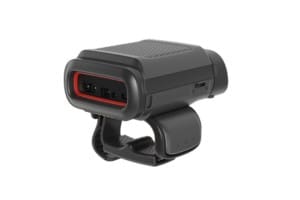
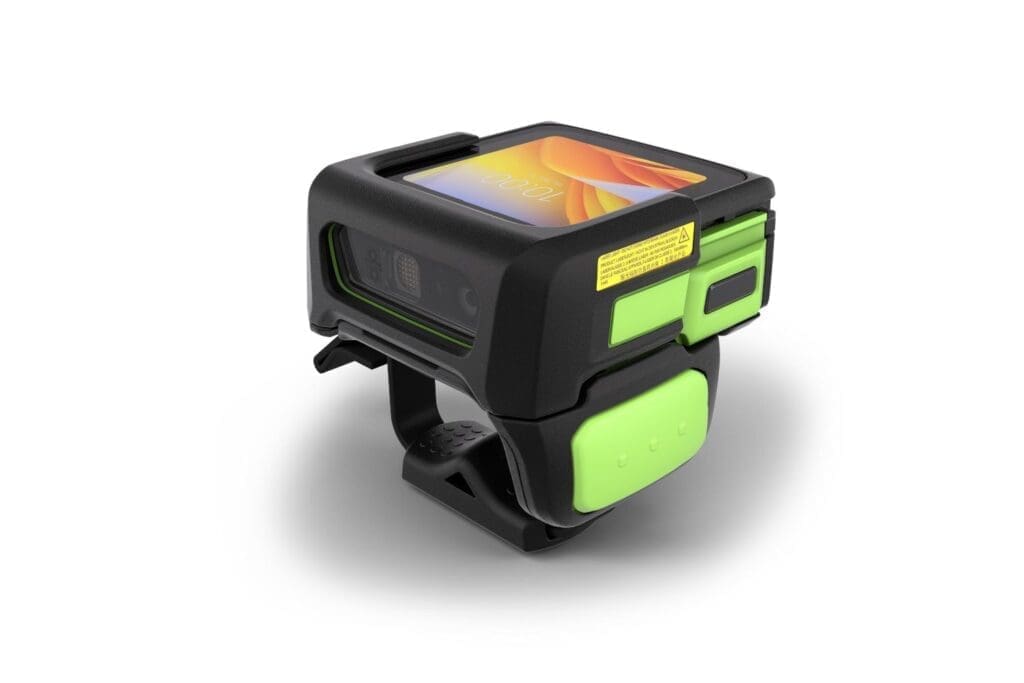
Improved Ergonomics and Comfort: Unlike handheld scanners, which can be cumbersome and lead to repetitive strain injuries with prolonged use, wearable scanners are designed to be lightweight and ergonomic. They are typically worn as a back-of-hand scanner, ring scanner, or on a pendant. This ergonomic design enhances worker comfort and reduces fatigue during long shifts.
Integration with Warehouse Management Systems (WMS): Wearable scanners can be seamlessly integrated with WMS and other enterprise systems, allowing for automated data capture and real-time synchronization of inventory and order information. Integration with WMS enables better tracking of inventory movements, improves order accuracy, and facilitates efficient replenishment processes.
Enhanced Safety and Compliance: Wearable scanners can incorporate features such as voice commands, augmented reality (AR) guidance, and proximity sensors to enhance worker safety and compliance with warehouse protocols. For example, AR-enabled smart glasses can provide hands-free navigation instructions and safety alerts, reducing the risk of accidents and injuries in the warehouse environment.
Wearable Scanners for the Warehouse Keep Getting Better
There was a time several years ago when wearable ring scanner options were not optimal. The highest-quality solutions were prohibitively expensive, form factors were not ideal, scanners were inflexible, and battery life was poor. However, times have changed. Today, CSSI can offer multiple wearable scanners which boast long batter life, powerful scanners, and easy-to-use form factors which make it a breeze to outfit the warehouse team. The typical warehouse worker appreciates these work-simplifying products, which further assures great adoption rates. Today, wearable tech can include products that function as a barcode reader, mobile computer, and even as a mobile printer.
How To Get Started With Wearables for Your Warehouse
Wearable tech offers numerous benefits in a warehouse environment, including hands-free operation, increased efficiency, real-time data capture, reduced errors, improved ergonomics, seamless integration with WMS, and enhanced safety and compliance. By leveraging wearable scanners, warehouses can optimize their operations, improve productivity, and maintain a competitive edge in today’s fast-paced logistics industry.
FAQ – Frequently Asked Questions About the Benefits of Wearable Scanners & Computers in the Warehouse
Q: How quickly can a warehouse expect a return on its investment in wearable scanners?
A. Payback depends on scan volume, labor costs, and how many touches each order requires, but high-volume picking and packing operations usually see it soonest. Savings come from three places. Workers save a second or two on every scan because they no longer pick up and put down a handheld. Fewer picking errors means lower costs for returns, re-shipping, and chargebacks. Fewer repetitive-strain complaints can also help. To estimate your own ROI, multiply the scans per worker per shift by the time saved per scan, then add your current cost of errors. A short pilot in one zone is the most reliable way to confirm the numbers before a full rollout.
Q: Will wearable scanners work with our existing WMS and mobile computers?
A. In most cases, yes. Ring and back-of-hand scanners, such as the Zebra RS5100 and RS6100 and the Honeywell 8680i, pair over Bluetooth with the Android mobile computers or wearable computers you already use. Scan data goes into your WMS application just as it would from a handheld’s built-in scanner, so you usually don’t need to change the software. Wrist-mounted wearable computers like the Zebra WS50 run Android and can host your existing WMS client or a terminal emulation session. An integration partner can check your current devices, OS versions, and applications for compatibility before you buy.
Q: Can wearable scanners stand up to a full shift and harsh environments like cold storage?
A. Enterprise wearables are built for industrial use, with sealing against dust and water, drop and tumble ratings, and operating ranges that include freezer conditions for models designed for cold storage. Batteries are typically hot-swappable, so a worker can change batteries mid-shift without re-pairing or losing data. For multi-shift or freezer operations, plan for spare batteries and multi-slot chargers, and pick models rated for your lowest temperatures and for gloved use.
Q: How hard is it to get workers to adopt wearable scanners?
A. Adoption tends to be easy because the scanner simplifies the job rather than adding steps. Most workers are comfortable after a short training session, since triggering a scan with the thumb or index finger quickly feels natural. The things that matter most are proper fit (offer adjustable straps and triggers for either hand), hygiene (use replaceable or washable straps when devices are shared), and involving floor leads in the pilot so they can champion the change. Feedback from early users also helps you refine workflows before a wider launch.
Q: What should IT consider for device management and security?
A. Wearable scanners and wearable computers should be managed like the rest of your mobile fleet. Android-based wearable computers can be enrolled in your mobile device management (MDM) or EMM platform to handle app deployment, OS updates, lockdown, and remote troubleshooting. Manufacturer tools such as Zebra’s StageNow and Honeywell’s Operational Intelligence make staging and monitoring easier. For Bluetooth ring scanners, set up a quick, consistent pairing method (such as scan-to-pair or tap-to-pair) and track battery health across the fleet. Also confirm that the devices support your Wi-Fi security standards, and include wearables in your lifecycle and repair planning, ideally with a service contract that covers accessories and batteries.