Manufacturing Vision Study – The Rise of the Connected Factory
Where are warehouse industry leaders planning to make operational investments?
Zebra Details Trends in Manufacturing’s Digital Transformation
Zebra Technologies has released the latest in its series of Vision Studies, surveys of global leaders providing insights into trends which impact competitiveness in specific industry verticals. We have previously provided vision studies on warehousing , field operations , and food safety . As the industry leader in enterprise mobility, Zebra is uniquely positioned to gather insights into how technologies such as artificial intelligence, machine vision, and robotics are transforming the world of work.
In this new manufacturing vision study titled The Rise of the Connected Factory , Zebra uses a survey of global manufacturing leaders and supply chain execs to explore how digital transformation is reshaping manufacturing, enhancing efficiency, innovation, and scalability. Key insights reveal that a majority of manufacturers prioritize digital initiatives despite the challenges of cost and time. Effective collaboration between C-suite, IT, and OT is critical for overcoming data silos and fostering agile manufacturing environments.
The report highlights a visibility gap in real-time product monitoring across production lines, emphasizing the need for technology investments that can yield quick returns. Furthermore, the study underscores the importance of integrating digital tools to empower a skilled workforce, suggesting that a unified approach across departments is essential for navigating the evolving industrial landscape. Overall, the study advocates for embracing digital transformation to drive competitive advantage and operational excellence in the manufacturing industry.
Top Benefits of Digital Transformation for a Manufacturing Leaders
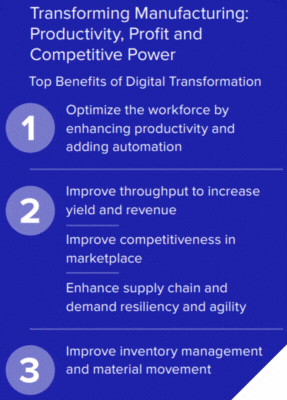
The manufacturing vision study outlines 3 primary benefits of digital transformation for those pursuing manufacturing excellence:
Improve inventory management and material management
Optimize the workforce by enhancing productivity and adding automation
Improve throughput to increase yield & revenue
Some of the Zebra Technologies Vision Study Revelations
92% of leaders believe that digital transformation is a strategic priority
89% of smart manufacturing decision makers plan to increase technology investments in 2024 warehouses
99% expect to implement RFID by 2029!
Download your free copy of the Manufacturing Vision Study
Complete the form below to immediately receive your free copy of Zebra’s Manufacturing Study “The Rise of the Connected Factory”. Learn how AI technology, industrial automation, machine vision and more are impacting the manufacturing sector.
Get Your Free Download – The Rise of the Connected Factory
FAQ – Frequently Asked Questions About Digital Transformation in Manufacturing
Q: What is the Zebra Manufacturing Vision Study, and how credible is the data? A. It’s a global survey Zebra Technologies conducted with roughly 1,200 C-suite, IT, and operations (OT) leaders across manufacturing sectors including automotive, electronics, food and beverage, pharma, and medical devices, spanning North America, Europe, Latin America, and Asia. The breadth of respondents gives businesses a reliable read on where the industry actually stands on digital transformation rather than anecdotal impressions from a single vendor or region.
Q: How many manufacturers actually have real-time visibility into their production floor? A. Very few. The study found that only 16% of manufacturing leaders have real-time work-in-progress monitoring across their entire production process. That leaves the large majority operating with delayed or incomplete data, which makes it harder to catch quality issues, bottlenecks, or downtime before they affect output. Nearly 6 in 10 leaders expect that gap to close by 2029 as more organizations invest in tracking technology.
Q: What’s the biggest obstacle standing in the way of digital transformation? A. Misalignment between IT and OT teams. About 1 in 3 leaders cite IT/OT disagreements as a key barrier, and 86% say they struggle to keep pace with the speed of technological change while also securing the devices being integrated onto the floor. IT tends to focus on data and connectivity while OT focuses on machine behavior and output, and when those groups don’t plan together, digital initiatives stall or create new silos instead of solving old ones.
Q: How big a role will AI play in manufacturing, and how soon? A. A growing one. 61% of manufacturers now expect AI to drive business growth by 2029, up sharply from 41% who said the same in 2024. That shift shows AI moving from an experimental technology to something manufacturers are actively planning around for the next few years, particularly for quality monitoring, predictive maintenance, and production visibility.
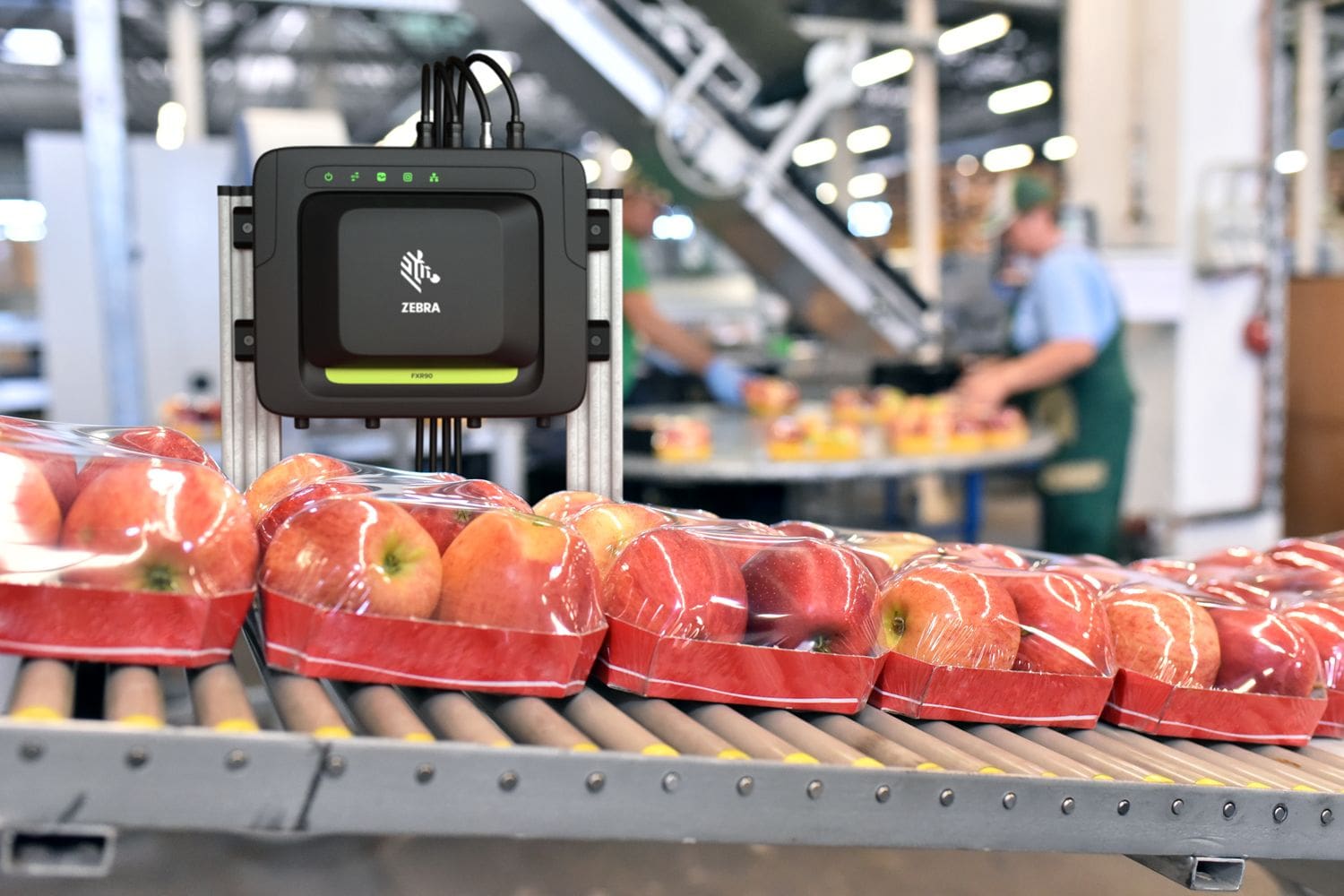
Q: What technologies should manufacturers expect to be investing in over the next five years? A. Machine vision, RFID, and robotics top the list, with 65-66% of leaders planning to implement each within five years, and 99% anticipating RFID deployment by 2029. Fixed industrial scanners follow at 57%. On the workforce side, 73% plan to reskill employees for data and technology use, and 7 in 10 expect to equip workers with mobility-enabling tools like wearable computers, tablets, and workforce management software – suggesting technology adoption and workforce strategy are increasingly treated as a single initiative rather than separate efforts.