5 Ways That Powered Mobile Carts are Beneficial to Use in a Warehouse Environment
Competition and market forces are driving warehouses and fulfillment centers to continually seek higher productivity. That can put a strain on supply chain workers, who are both the essential ingredient and the weak link of the operation. It makes sense for business leaders to seek every opportunity to improve the operation, particularly when overall productivity and effectiveness can be increased while simultaneously making the job easier for the warehouse workers.
Against this backdrop, a mobile powered cart make perfect sense in the distribution center or production operation. Here are several key reasons that mobile power should qualify as a top-of-mind investment:
5 Key Benefits of Powered Mobile Carts
1. Improved labeling accuracy
Powered carts can be equipped as mobile printing stations. This enables your team to bring printers right to the point of use, avoiding mistakes and omissions caused by having to pick up batch printouts of labels at a central thermal printer, which might then be erroneously applied. Labeling errors can be costly – the wrong item is eventually picked and shipped, leading to expensive returns and lower customer satisfaction. Mobile printing workstations eliminate labeling errors right at the source.
2. Increased inventory control
When a mobile powered cart is equipped with inventory management tools, such as barcode scanners or RFID readers, it becomes easier for employees to perform necessary inventory operations, which in turn makes it more likely that the work will be done as required without mistakes or shortcuts.
Mobile Printer Cart Reduces Errors and Boosts Warehouse Efficiency
3. Reduced travel waste
Costly footsteps cost real money! Basic LEAN principles dictate that waste should be eliminated wherever possible to improve overall efficiency. Travel waste is a significant loss to the organization, and travel takes time (costing money with an hourly employee), has an opportunity cost (what else could the employee have accomplished in that time?). Even small amounts of travel time add up when repeated frequently!
4. Improved worker ergonomics
The travel waste described above has an additional detrimental effect on the employee’s productivity for the rest of the day… as an employee physically tires from continual travel, his or her pace of work slows. Further, a mobile computer cart enables the employee to keep all necessary worktools nearby, reducing potential strains and injuries from lifting or bending unnecessarily.
5. Enhanced flexibility
This is an easy to miss yet powerful benefit of mobile powered carts… Your company can quickly reconfigure the deployment of technology assets, as dictated by the business requirements at that time. This unlocks the possibility for pop-up checkouts and point of sale, label printing at the point of use, inventory activities at the precise site in which they are occurring, and much more. Business needs change fast, so you should not be locked into static work environments… a flexible mobile workstation unlocks that possibility.
Ready for Powered Mobile Carts?
A mobile powered workstation has numerous benefits which immediately impact your operation. Powered mobile carts allow workers to move large quantities of materials quickly and easily, reducing the time and effort required for receiving, putaway, picking, and shipping. The use of mobile powered workstations also can help reduce labor costs by increasing the speed and efficiency of warehouse operations, allowing more work to be done with fewer workers.
Contact CSSI To Discuss Implementing Powered Mobile Carts In Your Operation
FAQ – Frequently Asked Questions About Powered Mobile Carts & Printer Carts
Q: What problem do powered mobile workstations actually solve in our facility? A. They move the work to where it happens. In most warehouses and plants, workers walk back and forth to a fixed computer or a central label printer to scan, print, and enter data. A powered cart puts the computer, scanner, and printer on a mobile platform, so receiving, pack-and-ship, returns, labeling, and quality control get done at the point of work. CSSI partner Newcastle Systems says this can double productivity from day one and cut errors by 92%, because data is entered and labels are printed right where the product is, not carried across the floor. In one case study, McCollister’s replaced a centralized labeling setup with mobile carts and reported 99.8% labeling accuracy.
Q: How are the carts powered, and will they last through a full shift? A. Each cart carries its own battery power system, so it doesn’t need a wall outlet or extension cords. Newcastle offers several options. Their portable power systems include the PowerSwap Nucleus lithium system, and dual-battery configurations add capacity and let you run more equipment. Some setups are built to keep running between shifts without shutting down. If you already have carts with fixed batteries, lithium upgrade kits are available. Runtime depends on what you mount on the cart (a thermal label printer draws differently than a laptop), so ask for a power assessment based on your actual equipment list.
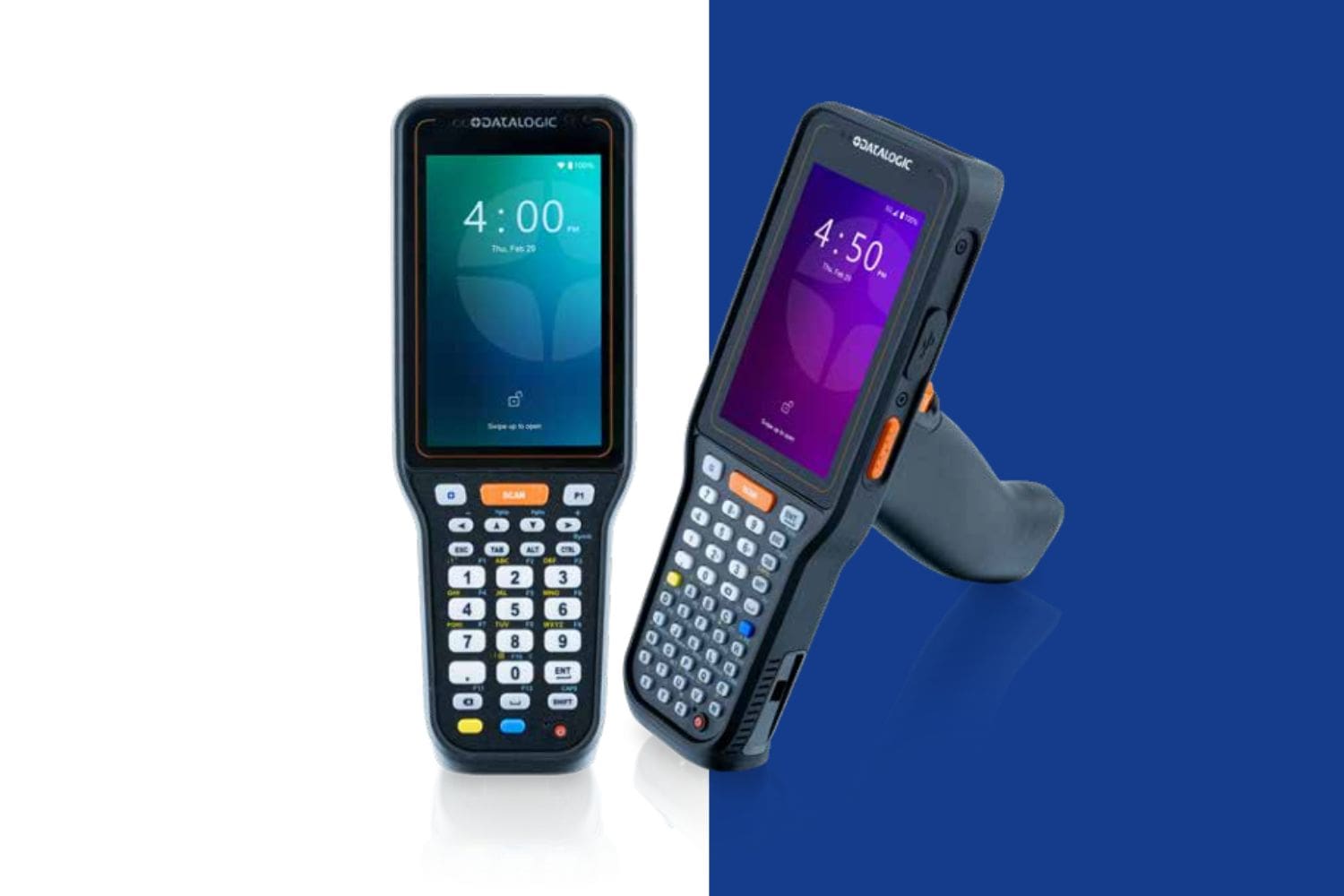
Q: What equipment can we put on a cart, and will it work with our existing hardware? A. The carts are designed as full mobile workstations. They can hold a computer or laptop, a monitor, a barcode scanner, and a label printer, and they give you real-time access to your WMS or ERP. That means you can usually reuse the Zebra, Honeywell, or Datalogic printers and scanners you already have. Newcastle’s engineering team works with customers early in the process to confirm the configuration. For IT, the main tasks are planning wireless coverage where the carts will travel and confirming device mounting, power draw, and connectivity before rollout.
Q: Which cart model is right for our operation? A. It depends on the task and how much equipment you need to carry. The EC Series is the entry-level, full-size option for basic tasks and a small set of components. The NB Series is Newcastle’s most popular and most versatile line, and it fits most warehouse and manufacturing applications. Typical uses include shipping and receiving, cold chain operations, supervisor stations, manufacturing QA, and data center crash carts. Accessories and custom configurations are available. A short time study or walkthrough of your workflows is the best way to match the cart to the job.
Q: How quickly will we see a return on the investment? A. Newcastle says payback typically comes in 6 to 8 months, with returns continuing for years after that. The savings come mainly from less walking, faster processing, fewer labeling and data entry errors, and getting more output from the same labor hours. That last point matters if you’re short-staffed or trying to cut overtime. To build your own business case, you can use Newcastle’s ROI calculator to estimate what walking currently costs you, or their free MotionMeter app for iOS to run time studies on your floor before you buy.