Zebra Wearable Scanners and Computers Drive Picking Productivity
As demands on order fulfillment processes increase (higher volumes and faster picking expectations), high-performing companies turn to wearable scanners and computers for a tech edge. Zebra Technologies Corp offers a range of wearables in its data capture and mobile computing portfolio.
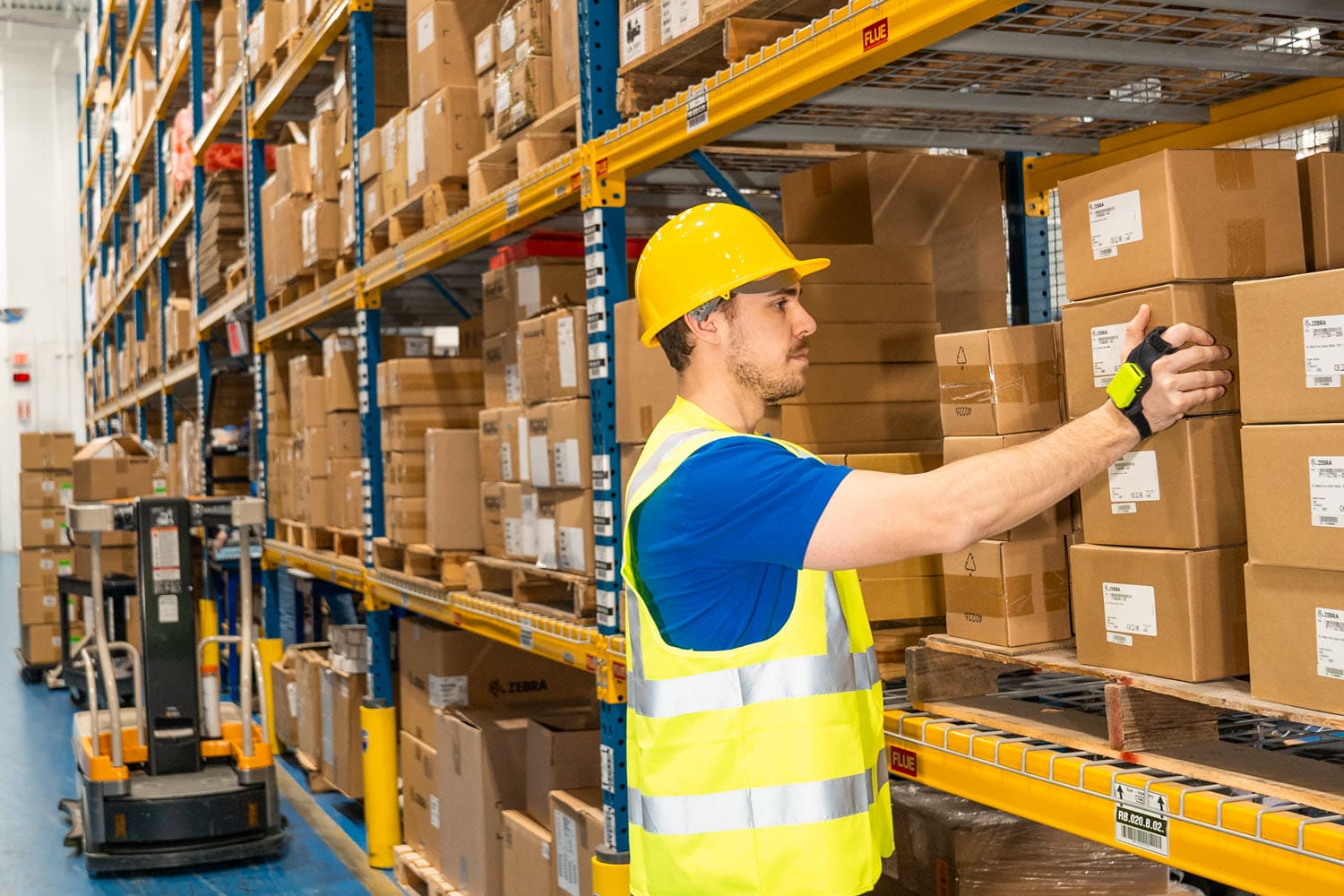
We’ve previously discussed the advantages of wearable computers and scanners (see prior articles Why use wearable scanners in the warehouse? and Wearable technology drives warehouse productivity ). Let’s sum it up by saying that wearables enable workers to receive, ship, or pick orders faster by keeping their hands free and by reducing time spent picking up and putting down scanners and handheld computers. Workers stay on task and move quicker, as documented by time studies.
Zebra offers a complete range of wearable items – both Zebra barcode scanners which link to a mobile computer, and Zebra wearable mobile computers. Take a look at the current lineup:
Zebra Wearable Mobile Computers and Barcode Scanners for 2025
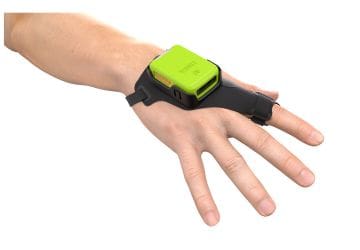
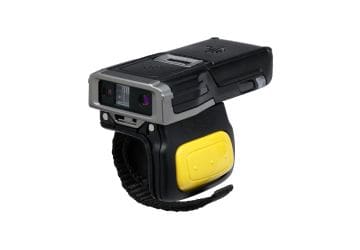
The Zebra RS2100 Wearable Scanner is the world’s smallest and lightest enterprise-grade wearable barcode scanner. The light design creates maximum comfort for users, while maintaining enterprise class wearability and offering a great scan engine.
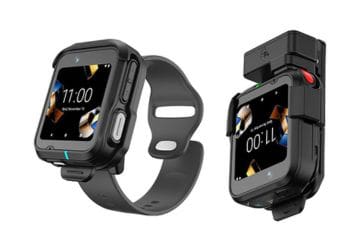
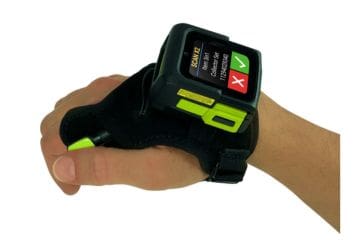
The WS301 Android Wearable Computer is the latest addition to Zebra’s wearables family. It is the smallest and lightest wearable, and empowers workers for hands-free workflows and seamless communication. Use for voice-picking, push-to-talk, and task management.
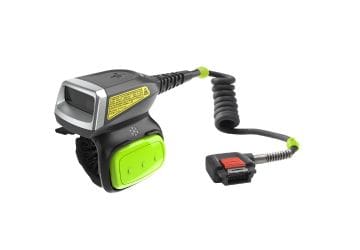
Combine the powerful RS5000x Corded Ring Scanner with a Zebra wearable computer for hands-free productivity. Suitable for use in freezer and refrigerated environments.
The RS5100 Bluetooth Ring Scanner lets your users go cordless… easy device pairing via bluetooth. The ergonomic design features a thumb trigger. Choose from several bluetooth wearable scanner options to best suit your environment.
The feather-light RS6100 Bluetooth Ring Scanner improves on the RS5100… this wearable lets you scan at distances from 2 inches to 40 feet! Choose between cordless and wired versions (for intense all-day usage).
The unique WS50 Android Wearable is a powerful mobile computer and scanner with color touch screen worn on the back of the hand. Combine scanning, computing/WMS direction, and voice communication into a single device!
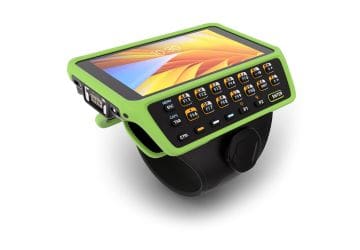
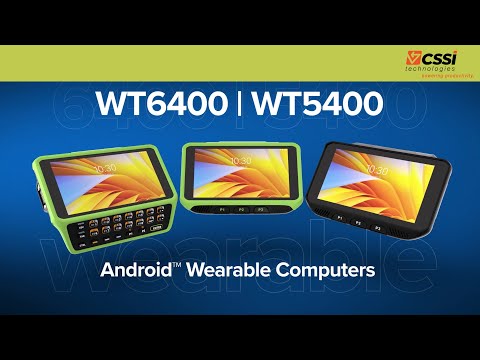
The Zebra WT6400 Wearable Mobile Computer maximizes utility and computing power, with an optional keypad and features to power hands-free picking operations. Android OS. This updates prior products such as the WT6300 wearable computer.
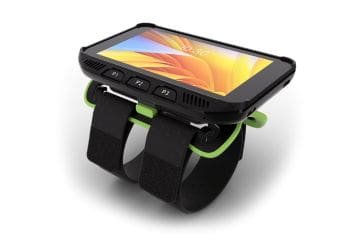
The Zebra WT5400 Wearable Mobile Computer is a new lower-cost yet purpose-built wearable computer packed with innovations to support hands-free picking. Android OS.
Android Wearable Computers: WT6400 and WT5400
The best-in-class dedicated wearable computers are the WT6400 and WT5400. These are the go-to choice for demanding warehouse environments worldwide where a wearable device is needed.
Let’s Talk about Zebra Wearable Scanners & Computers
Would you like to discuss and test Zebra wearable scanners or Zebra wearable mobile computers? You can start by speaking with the barcode scanning and Zebra product experts at CSSI Technologies – we handle the complete range of Zebra mobile devices and fixed industrial scanners. We’ll take a look at your workflows and recommend products to trial. Please contact us to discuss Zebra wearable computers and scanners.
FAQ – Frequently Asked Questions About Zebra Wearable Scanners and Wearable Computers
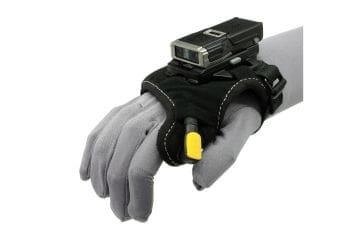
Q: What are Zebra wearable computers, and how are they used in a warehouse? A. Zebra’s wearable lineup includes wrist- or hip-mounted computers (like the WT6400) paired with finger-worn ring scanners (like the RS6100 and RS5000). Instead of carrying a handheld device, a worker straps the computer to their wrist or hip and slips the scanner onto a finger, scanning barcodes with a natural point-and-shoot motion while keeping both hands free to lift, sort, and move product. This combination is built for high-volume tasks such as picking, receiving, put-away, and loading, where constantly setting down and picking back up a handheld device slows workers down.
Q: What’s the difference between the wrist-mounted computer and the ring scanner? A. They’re two separate devices that work together as a system. The wrist- or hip-worn unit (such as the WT6400) is the computer — it runs the warehouse management or voice-picking application, displays task data, and connects to the network. The ring scanner (such as the RS6100 or RS5000) is a lightweight, finger-mounted scan engine that reads barcodes and sends the data to the wrist computer over Bluetooth or a corded connection. Zebra offers multiple wearing styles for the ring — including hand mounts, trigger-finger mounts, back-of-hand mounts, and retractable lanyards — so it can be fitted to either hand and to different worker preferences.
Q: Do wearables actually improve productivity, or is that just marketing? A. Zebra cites measurable gains from combining a ring scanner, wearable computer, headset, and voice software into one workflow: worker productivity up 15%, with 39% fewer errors compared to speech-only wearable setups. The efficiency comes from eliminating the repeated motion of picking up and putting down a handheld scanner — workers keep both hands on the product at all times, and many of these devices also support voice-picking headsets (like Zebra’s HS2100 or HS3100) so tasks can be confirmed hands-free and eyes-up.
Q: Can these devices hold up in cold storage or other harsh warehouse conditions? A. Yes — Zebra’s ring scanners are triple-tested for durability, covering sealing, drop, and tumble performance across their full rated temperature range. They’re designed to keep working in freezers, coolers, loading docks, and outdoor conditions including extreme heat, cold, rain, and snow, making them a fit for cold chain and multi-zone distribution environments as well as standard ambient warehouses.
Q: How do Zebra wearables fit into our existing warehouse software and device management? A. Zebra wearables run on the same Mobility DNA suite used across the company’s mobile computer line, which handles device deployment, security, and lifecycle management to help lower total cost of ownership. VisibilityIQ adds device-level data and productivity dashboards so IT and operations teams can monitor fleet health and usage. Because they run standard Zebra enterprise software, wearables are built to integrate with existing WMS and voice-picking applications rather than requiring a separate management approach.