A Next-Generation Rugged Tablet From Honeywell / Brady
The RT710 is a new 10.1-inch ultra-rugged Android vehicle-mountable tablet designed from the ground up to live on a forklift, and it is one of the first major mobile computers to launch under the Brady name. Brady Corporation completed its acquisition of Honeywell’s Productivity Solutions and Services business in August 2026, and the RT710 arrives with a Brady datasheet and Brady-branded scan engines and software tools.
The platform underneath is familiar. The RT710 is built on Mobility Edge, the same hardware and software foundation behind the mobile computers our customers have deployed for years. What has changed is the form factor and the radio set: Brady describes the RT710 as a first-of-its-kind rugged, ultra-connected tablet purpose built for vehicle mounting.
Here is what you need to know, what is different, and where we think it fits best.
Brady RT710 at a glance
Feature
Brady RT710
Display
10.1 in WUXGA (1920 x 1200), 1,000 nits, Gorilla Glass Victus 2, moisture-tolerant touchscreen
Processor
Qualcomm QCx6690, 2.9 GHz
Memory and storage
8 GB / 128 GB or 16 GB / 256 GB
Operating system
Android 16, with version support guaranteed through Android 20 (subject to feasibility)
Wireless
5G, private LTE/5G and CBRS, Wi-Fi 6E and Wi-Fi 7, Bluetooth 6.0, NFC
Battery
10,000 mAh standard, 20,000 mAh extended, 10,000 mAh cold storage; hot swappable
Scanning
Optional integrated S0703 1D/2D imager or S0803 FlexRange imager
Cameras
50 MP rear, 8 MP front
Ports and buttons
1 USB Type-C, 2 USB Type-A; two scan buttons, action/push-to-talk button
Durability
IP66 and IP68; multiple 8 ft (2.4 m) drops to concrete at ambient temperature
Operating temperature
-4°F to 131°F standard; -22°F to 122°F cold storage option
Size and weight
10.24 x 7.17 x 0.93 in; 1,070 g (about 2.4 lb) with standard battery
Warranty
3-year factory warranty
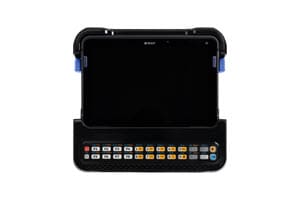
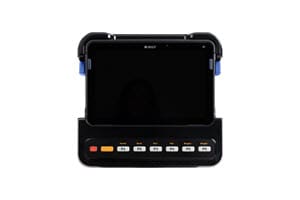
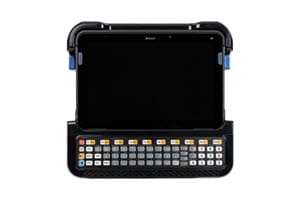
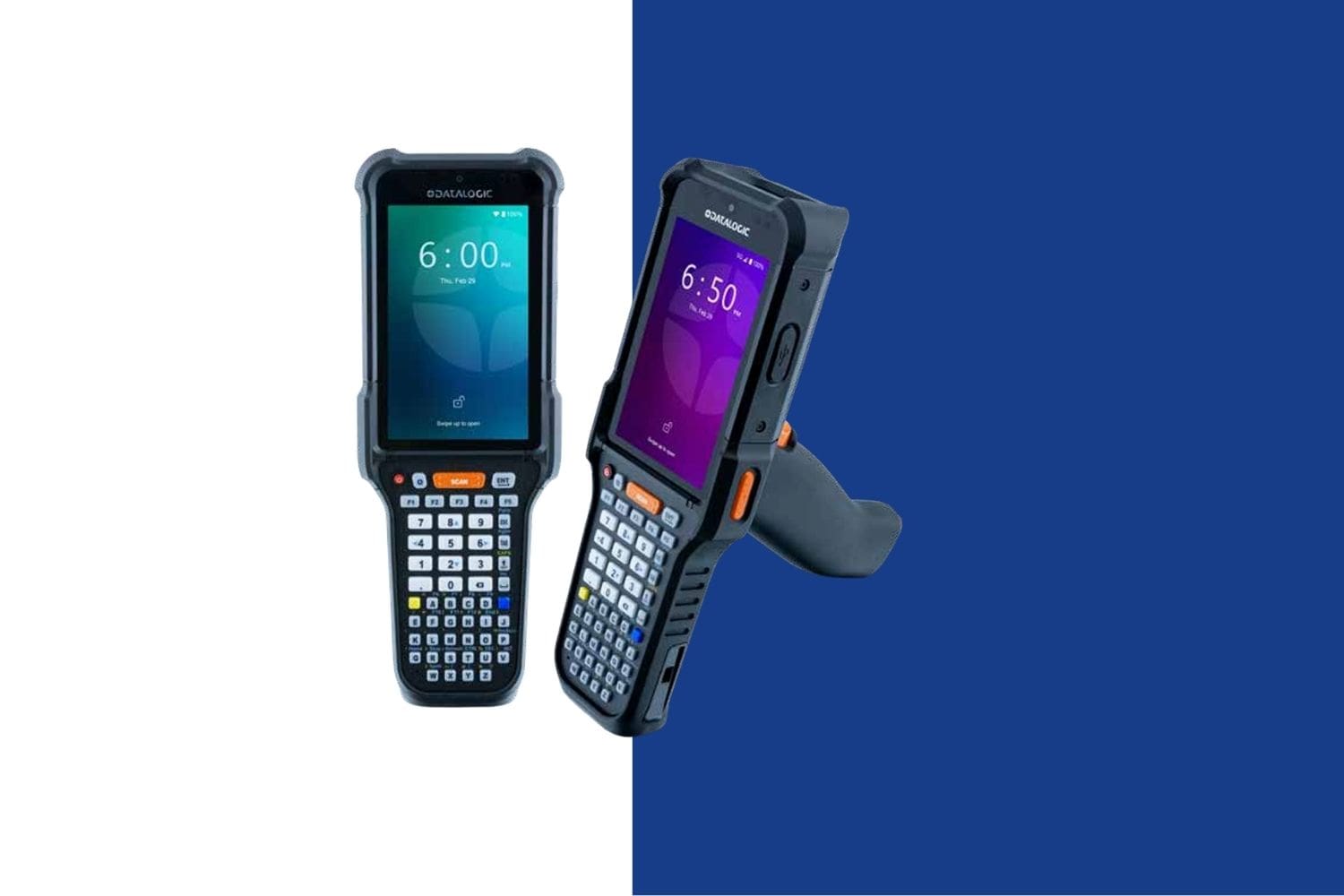
Choose from Several Keyboard Options
What is new and different About the Brady RT710
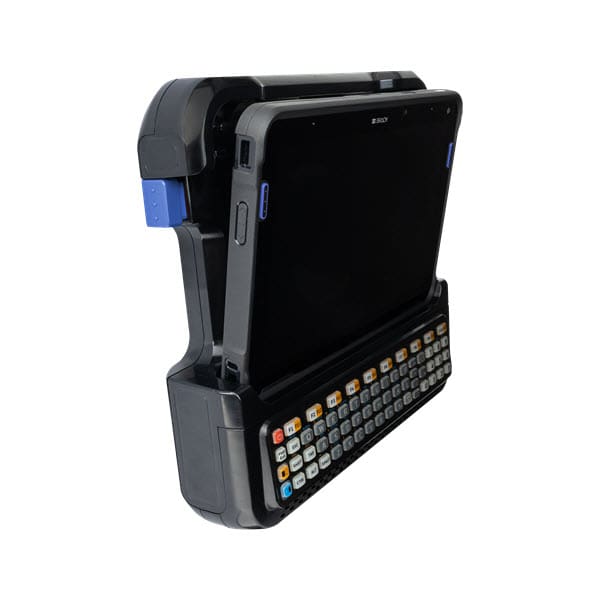
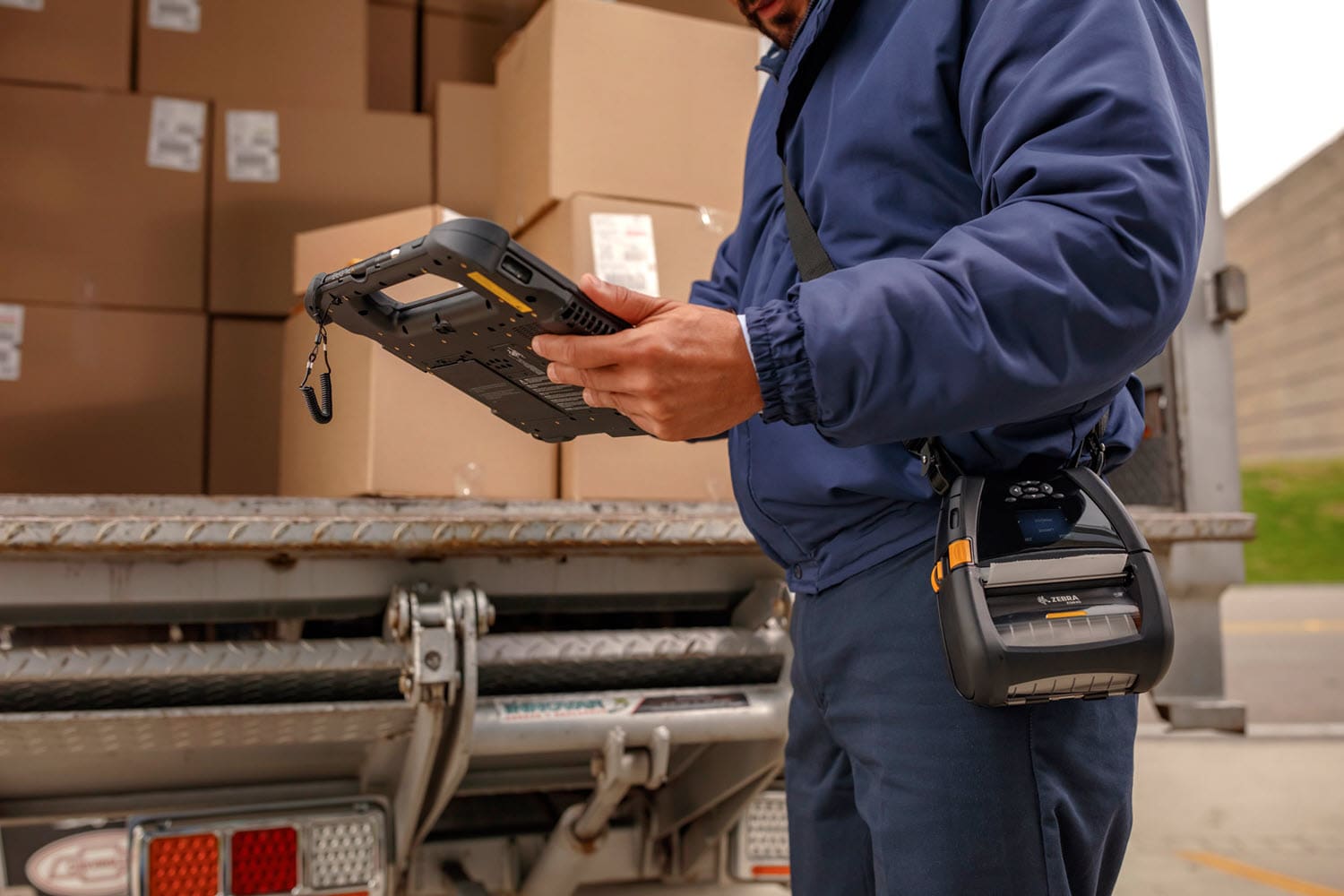
It is a tablet designed to be a vehicle-mount computer. Most rugged tablets are handhelds that can be adapted to a vehicle with a third-party mount. The RT710 starts from the opposite direction: built for vehicle deployment first, with an accessory ecosystem of docks, printers and scanners around it, and still light enough to undock and carry.
The connectivity is a generation ahead. Wi-Fi 7 with multi-link operation, 5G with dual SIM (one eSIM, one nano SIM), and support for private cellular and CBRS networks all come in one device. It is also AT&T FirstNet compliant for first responder networks. For large facilities, yards and outdoor operations where Wi-Fi coverage runs out, that is a meaningful change.
RFID is part of the story. Brady lists integrated RAIN RFID capability alongside the optional barcode imagers, which opens the door to pallet and asset reads from the vehicle without a separate reader.
The lifecycle is unusually long. Mobility Edge brings lifecycle, security and support extending beyond 2036, and Android version support from 16 through 20. For IT teams tired of refreshing vehicle-mount hardware because the operating system aged out, this is the headline.
Power is built for multiple shifts. The standard 10,000 mAh battery is aimed at a full shift, the 20,000 mAh option at extended and multi-shift use, and hot swap means the tablet keeps running while the battery is changed.
The display and build are made for abuse. A 1,000-nit screen stays readable in bright dock doors and outdoor yards. Gorilla Glass Victus 2, IP66/IP68 sealing and 8-foot drop ratings cover the rest.
It works with Brady’s software ecosystem. Operational Intelligence for device and fleet visibility and Smart Talk for voice and messaging run on the RT710, along with integrated push-to-talk.
Brady RT710 Use Case: The vehicle-mounted computer, rethought
Forklifts, reach trucks, yard tractors and delivery vehicles are where the RT710 is meant to spend most of its life. Brady’s own framing is direct: traditional vehicle-mounted computers and consumer-grade devices fall short where constant motion, extreme conditions and continuous uptime are the norm.
Several design choices make it a strong fit on a lift truck:
A full 10.1-inch screen for WMS work. There is room for pick lists, putaway tasks and slotting screens without constant scrolling, and 1,000 nits keeps it readable when the truck moves from a dark aisle to a sunlit dock.
Mount it, then take it with you. At about 2.4 lb, the tablet can leave the dock for a cycle count, a damage photo with the 50 MP camera, or a signature at the trailer, then go back on the truck.
Connectivity that follows the vehicle. Wi-Fi 7 with fast-roaming support covers the building; 5G and private cellular cover the yard and the road.
Peripherals without adapters. Two USB Type-A ports and one USB Type-C, plus Bluetooth 6.0, connect tethered or cordless scanners, mobile printers and headsets.
Scanning on board. An optional integrated imager, including a FlexRange engine for near and far reads, means operators can scan a rack label without reaching for a second device.
No downtime for power. Hot-swap batteries keep trucks moving across shift changes.
If you are running aging Windows-based or early Android vehicle-mount terminals, the RT710 is a credible replacement path that puts your vehicle fleet on the same Mobility Edge platform as your handhelds.
Use the RT710 in a vehicle dock, or pop the tablet out for mobile use. This creates a flexible use allowing you to get more value out of your investment. Need to replace a broken tablet? Simply snap the new one into the existing vehicle dock. Choose from multiple keyboard configurations.
Brady RT710 Use Case: Cold storage and freezer warehouses
Cold chain operations are hard on mobile computers. Batteries fade, touchscreens fog and misread, and plastics turn brittle. The RT710 is offered in a dedicated cold storage configuration to address this.
Rated to -22°F (-30°C). The cold storage option operates from -22°F to 122°F, compared with -4°F to 131°F for the standard model. That covers most freezer environments.
A battery built for the cold. The cold storage model uses its own 10,000 mAh cold storage battery.
Drop tested in the cold. The tablet is rated for multiple 5 ft (1.5 m) drops to concrete at cold operating temperature per MIL-STD-810H.
Built for the freezer door. Thermal shock tolerance from -22°F to 158°F matters for trucks that cross between freezer, cooler and ambient dock all shift long.
A touchscreen that tolerates moisture. Condensation and frost are a fact of life when equipment moves between zones; the moisture-tolerant display is designed to keep working through it.
Sealed against washdown and dust. IP66 and IP68 ratings suit food and beverage facilities.
For cold storage operators, the practical benefit is one device type across freezer, cooler and dry zones, rather than a separate specialty terminal for the freezer fleet.
Where else it fits
Manufacturing. A shop-floor terminal for work instructions, quality checks and material moves that can be mounted at a workstation or carried to the line.
Distribution and yard management. 5G and private network support keep yard trucks and gate staff connected beyond the reach of indoor Wi-Fi.
Transportation and logistics. Proof of delivery, in-cab workflows and contactless payment through the integrated NFC reader.
Field service. A large, bright, weather-sealed screen with GPS and dual SIM for crews working away from the building.
Talk to CSSI about the Brady RT710
Contact CSSI to learn more about the RT710 tablet. CSSI Technologies helps warehousing, distribution, cold storage, manufacturing and transportation operations select, configure and deploy rugged mobile computing. If you are planning a vehicle-mount refresh or need a tablet that survives the freezer, contact us to discuss RT710 configurations, mounting and accessories, and how it fits with the devices you already run.
FAQ – Frequently Asked Questions About the Brady RT710
Q: Is the RT710 a true vehicle-mount computer, or a tablet adapted for forklift use?
A. The RT710 was designed for vehicle mounting from the start. Brady describes it as a first-of-its-kind rugged, ultra-connected tablet that is purpose built for vehicle mounting, supported by an accessory ecosystem of docks, printers and scanners. At about 2.4 lb with the standard battery, it can also be undocked and carried for cycle counts, damage photos or signatures at the trailer.
Q: Will the RT710 hold up to daily forklift use?
A. The RT710 is independently certified to IP66 and IP68 for dust and water protection. It is rated for multiple 8-foot (2.4 m) drops to concrete at ambient temperature. The 10.1-inch display uses Gorilla Glass Victus 2 and a moisture-tolerant touchscreen, and its 1,000-nit brightness helps it stay readable as trucks move between dark aisles and bright dock doors.
Q: Can the RT710 be used on forklifts that work in freezers and coolers?
A. Yes. A cold storage configuration operates from -22°F to 122°F (-30°C to 50°C) and uses a dedicated 10,000 mAh cold storage battery. The standard model operates from -4°F to 131°F. The tablet is also rated for thermal shock from -22°F to 158°F, which matters for trucks that cross between freezer, cooler and ambient dock areas throughout a shift.
Q: How does the RT710 stay connected and powered across a full shift?
A. The RT710 supports Wi-Fi 6E and Wi-Fi 7 inside the building. It also supports 5G, private cellular and CBRS networks for yards and large facilities where Wi-Fi coverage runs out. The standard 10,000 mAh battery is aimed at full-shift use, and an optional 20,000 mAh battery covers extended and multi-shift use. Batteries are hot swappable, so the tablet keeps running during a battery change.
Q: How long will the RT710 be supported, and how does it fit with our existing devices?
A. The RT710 is built on the Mobility Edge platform, with lifecycle, security and support extending beyond 2036. It ships with Android 16, and Brady guarantees Android version support through Android 20, subject to technical and commercial feasibility. Major OS upgrades require an active warranty or service agreement. Sharing a platform with other Mobility Edge mobile computers simplifies device management and deployment for IT teams.
Q: Is the RT710 a Honeywell product or a Brady product?
A. The RT710 was developed by Honeywell. Honeywell sold its rugged mobile computing business to Brady in August of 2026. So the RT710 was launched under the Brady brand. Honeywell mobile computers, tablets, scanners, and label printers are now part of the Brady product line.