Achieve an immediate productivity boost with mobile printer carts
Mobile powered carts dramatically boost productivity and reduce errors in your warehouse or manufacturing facility by eliminating wasted travel. Also, a computer cart or battery powered cart for a label printer reduces the opportunities for mistakes and omissions that result when workers can not immediately access labels and information… improving your customer service and inventory accuracy.
Top 5 Reasons Companies Love a Mobile Powered Printer Cart
Faster dock-to-stock – reduce cycle times during material handling
Trimmed payroll – get more done with fewer people in the distribution center with an industrial powered printer carts
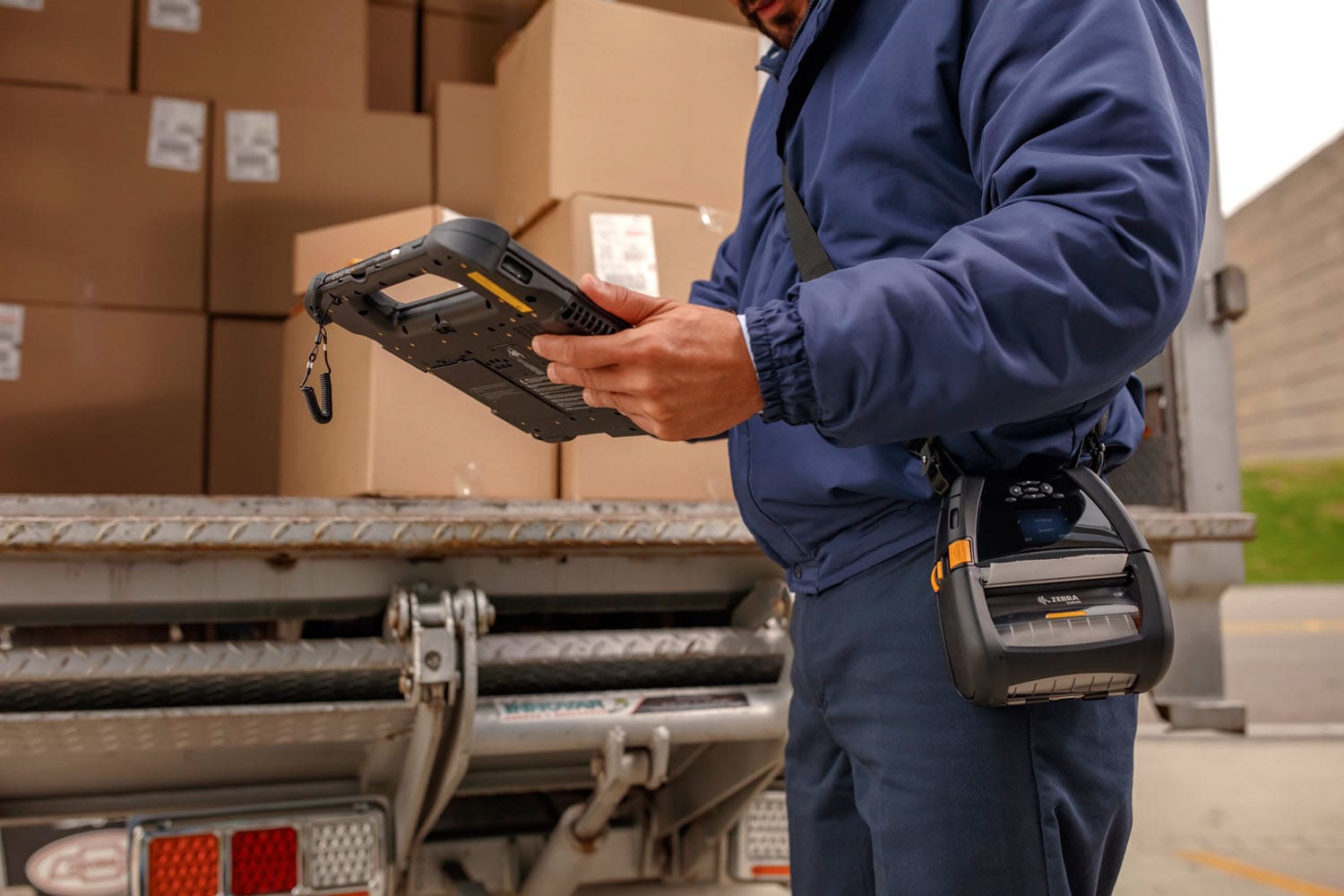
Reduce mislabeling – accuracy is improved when labels can be printed and applied cart-side via a mobile printer, reducing expensive customer returns
Mobile workstation – reduce employee travel waste and boost time-on-task with portable power
Minimal infrastructure footprint – mobile powered carts are easy to implement and don’t require software changes and infrastructure upgrades
CSSI Offers Industrial Powered Printer Carts for Distribution and Manufacturing
CSSI offers durable powered cart solutions from Newcastle Systems, a leader in the mobile cart industry. Newcastle mobile carts are built for flexibility and customization to your specific needs, and accommodate a variety of configurations and workstation accessories. Powered by long-lasting and easy to use battery packs, these mobile workstation solutions can be the backbone your workflow needs. Contact us to learn more.
FAQ – Frequently Asked Questions About Industrial Powered Printer Carts in the Warehouse
Q: How do powered printer carts improve productivity on the warehouse floor?
A. Powered printer carts take the workstation to the work. Workers don’t have to walk back and forth to a fixed desk to print labels, look up orders or update inventory. They roll a fully equipped station to the dock, pallet or receiving area and finish the task on the spot. Newcastle Systems says this approach can double productivity. Its customers report results such as a 40% gain in receiving output with fewer staff, and 3.5 miles of daily walking eliminated per worker. Those minutes add up quickly across a shift and a team.
Q: Will a mobile printer cart help reduce shipping and receiving errors?
A. Yes. Errors often happen when workers carry information, or labels, from a central desk back to the product. A cart gives each worker a dedicated mobile space with an integrated computer, barcode scanner and label printer. Labels are printed and applied right at the pallet or package, and scans and data entry happen in real time. That reduces mislabeled shipments, missed check-ins and inaccurate inventory counts.
Q: How are the carts powered, and do we need to add outlets or run extension cords?
A. No. Powered carts have a built-in power system designed to run the computer, printer and scanner all day without a nearby outlet or extension cord. That eliminates trip hazards and frees the cart to be used anywhere in the facility, including docks and open floor areas where power drops aren’t practical. Before buying, IT and operations teams should confirm the battery’s runtime, charging time and hot-swap options against their shift patterns.
Q: Will powered carts integrate with our existing WMS, ERP and shipping software?
A. The cart is a mobile platform for the hardware your systems already use, so it works with your existing ERP and WMS applications. Labeling and shipping configurations can also be equipped with receiving or multi-carrier shipping software. From an IT perspective, the main things to plan for are Wi-Fi coverage at every location where the carts will work, plus endpoint management and security for the onboard PC, just as you would for any networked workstation. Printer selection matters too. Carts can be outfitted with industrial label printers, such as Zebra models, that are compatible with your current label formats and drivers.
Q: Which warehouse workflows benefit most from powered printer carts?
A. Receiving and shipping see the biggest gains. In receiving, workers check in deliveries, verify quantities and update inventory records at the dock instead of walking paperwork back to a desk. In shipping and pack-and-ship, they print and apply labels right at the outbound pallet. Carts also support returns processing, cycle counts, inventory management and picking. Because the carts are mobile, managers can shift workstations to wherever demand is heaviest that day, and open up floor space that permanent workstations would occupy. Adjustable heights and ample work surfaces also reduce worker strain and fatigue over long shifts.