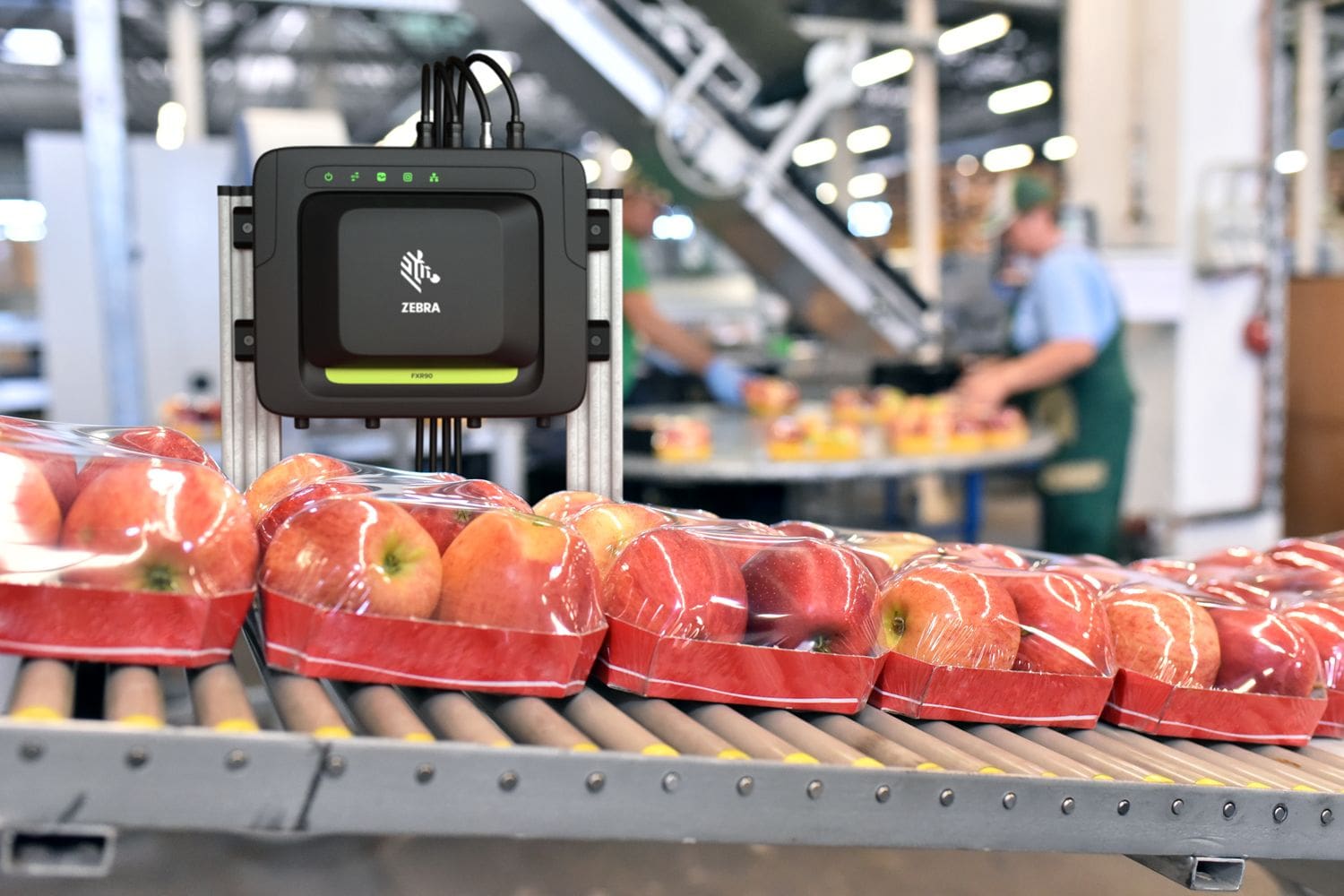
Feature-Packed Fixed Industrial Scanner to Boost Automation
Faster Path to Automated Data Capture with Zebra’s FS80 Fixed Scanner
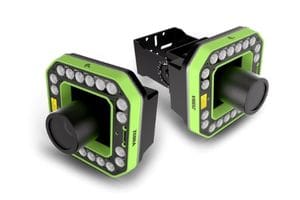
Fixed industrial scanners are critical for modern automation of data capture processes. Modern scanners can capture a broad range of barcode symbologies as well as OCR. The FS80 is Zebra Technologies Corp’s top of line fixed barcode scanner. This is a peerless product which combines a powerful feature set along with fast setup capabilities which can get you online quickly. As an authorized Zebra mobile computer, barcode scanner, and machine vision partner, CSSI can help you test Zebra scanners for successful process automation. Learn more about the FS80 fixed scanner:
Key Features of the Zebra FS80 Fixed Industrial Scanner
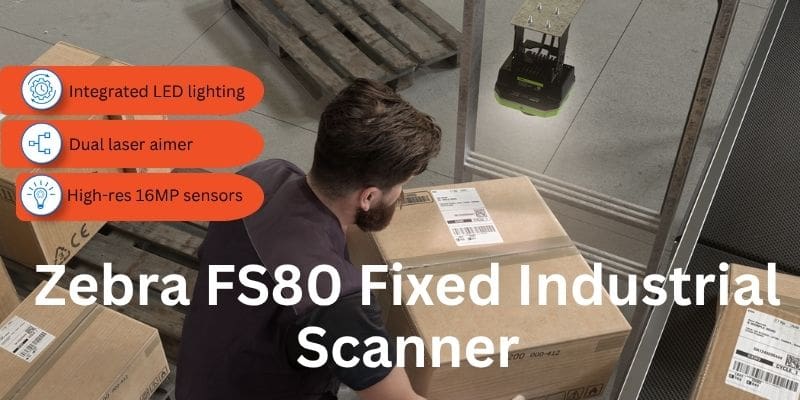
As Zebra’s top-of-line fixed industrial barcode scanner, the FS80 offers a peerless feature set. Some key features include:
Variety of sensor resolution models: 5MP, 9MP, 12MP, 16MP
Bright integrated lighting, and red, white and infrared angles
Audible feedback helps in loud environments
Dual laser-aimer
360 degree decode and job status LEDs
Zebra Aurora Focus software enables quick control and configuration of your industrial fixed scanner fleet.
Target Critical Workflows with the FS80 Fixed Barcode Scanner
There are an endless variety of key data capture jobs which can be tackled by the FS80 industrial barcode scanner. Consider some of these common tasks:
Scan tunnels
Tote and container ID
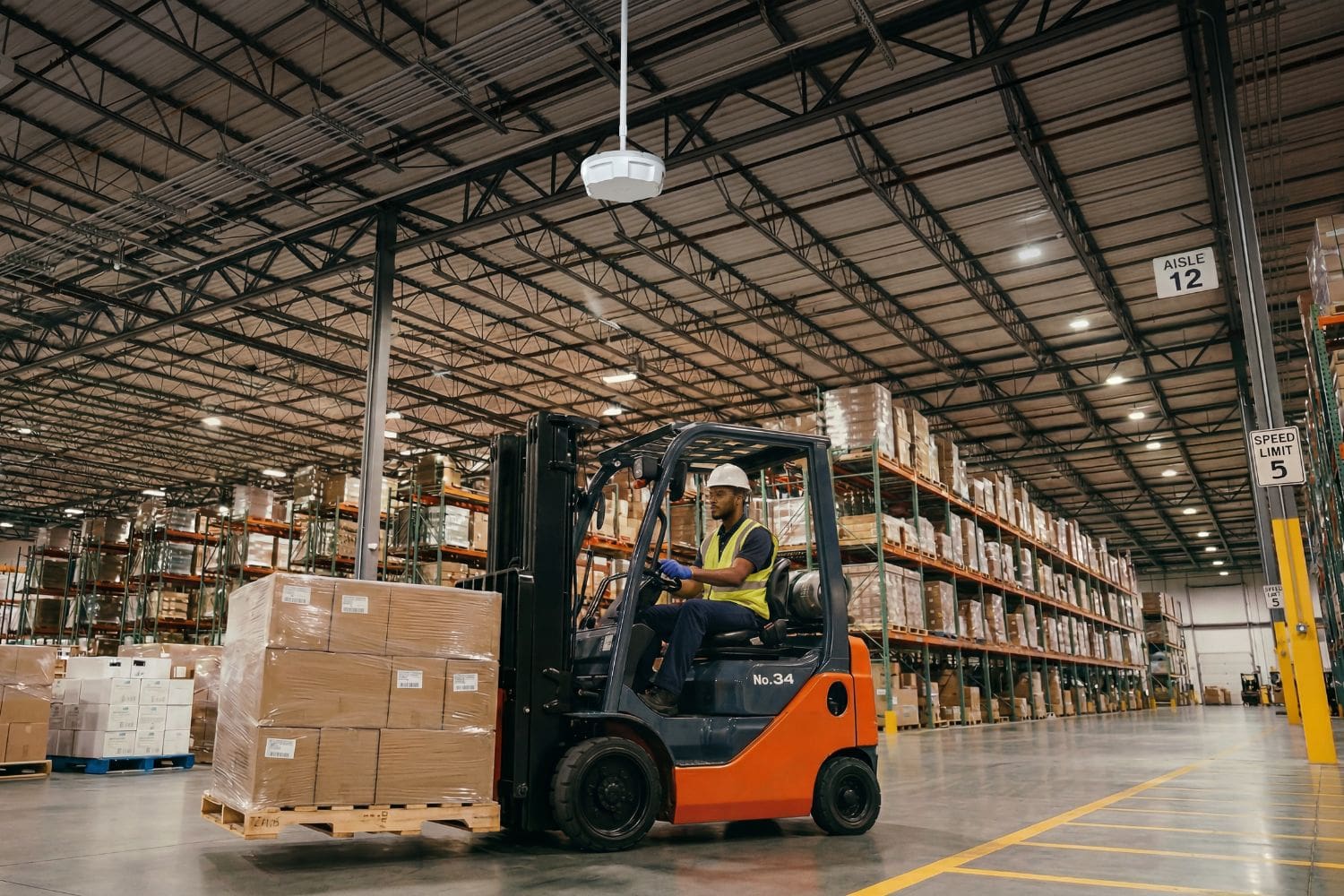
Forklift scanning
Batch and pallet reading
Barcode verifier
Learn More About the Zebra FS80 Fixed Industrial Scanner
CSSI is a certified Zebra technology sales and support partner. We can meet your mobile computer, barcode scanner and machine vision needs, as well as label printers. Contact us to discuss your project.
FAQ – Frequently Asked Questions About the Zebra FS80 Fixed Industrial Scanner
Q: What is the Zebra FS80 Fixed Industrial Scanner, and what is it designed to do? A. The FS80 is a fixed industrial scanner built for challenging track-and-trace applications in high-speed operations. It combines high-resolution sensors with powerful integrated LED lighting to capture barcodes of varying types, sizes, and quality conditions across a wide area and at long range, making it well suited to high-speed logistics, distribution, and manufacturing environments where reliable, precise data capture is critical.
Q: What resolution options does the FS80 come in, and how do I choose the right one? A. The FS80 is available in four sensor resolutions: 5MP, 9MP, 12MP, and 16MP (model numbers FS80CM05, FS80CM09, FS80CM12, and FS80CM16, respectively), all using a monochrome CMOS sensor. Higher-resolution models capture finer barcode detail and cover wider fields of view but run at somewhat lower frame rates, while lower-resolution models scan faster. The right choice depends on barcode size, read distance, and line speed in your specific application.
Q: How well does the FS80 hold up in demanding warehouse or manufacturing environments? A. The FS80 carries an IP67 ingress protection rating and is rated for humidity up to 90% non-condensing, so it’s built to withstand dust and washdown-type exposure on the production or warehouse floor. It operates across a 0°C to 45°C range and can be stored from -40°C to 70°C, giving it headroom for facilities with wider temperature swings, such as cold chain or seasonal warehouse operations.
Q: What connectivity and power does the FS80 require? A. The FS80 connects via an M12-X 8-pin (female) port for Gigabit Ethernet and communicates over TCP/IP, making it straightforward to integrate into existing industrial network infrastructure. It draws 15 W (625 mA @ 24VDC) of power. Setup, deployment, and ongoing operation are managed through Zebra’s Aurora Focus platform, which centralizes configuration across fixed scanning infrastructure.
Q: Can the FS80 be upgraded or reconfigured as scanning needs change? A. Yes. The FS80 is built on an Intel Atom x6211E dual-core processor (1.3 GHz base, up to 3.0 GHz burst) with enough processing headroom to support optional Decoder Packages and Machine Vision Toolsets. This lets the same hardware take on more advanced decoding or machine vision tasks over time without a full scanner replacement, which is useful for operations expecting to scale or add new track-and-trace requirements.