Mobile Device Battery Management Boosts Productivity
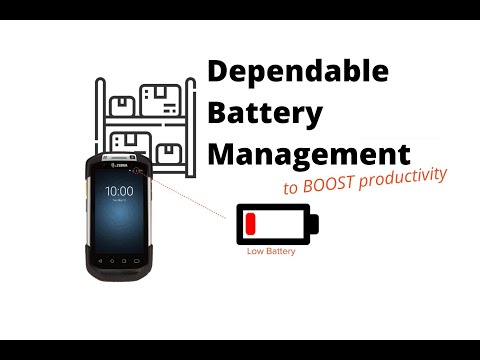
Resolve downtime and device battery failure problems before they even occur
Are Your Mobile Scanner Batteries Ready For the Workday?
Proactive maintenance, rather than reactive crisis management, is the key to a successful operating environment. Batteries, in particular, are a frequent point of failure. When it comes to managing growing fleets of mobile computers and rugged tablets, it gets harder and harder to stay ahead of battery power problems. Luckily, CSSI has smart battery management system solutions which allow you to quickly identify rechargeable battery issues before they become a crisis and interrupt a work shift.
The Shocking High Cost of Warehouse Downtime
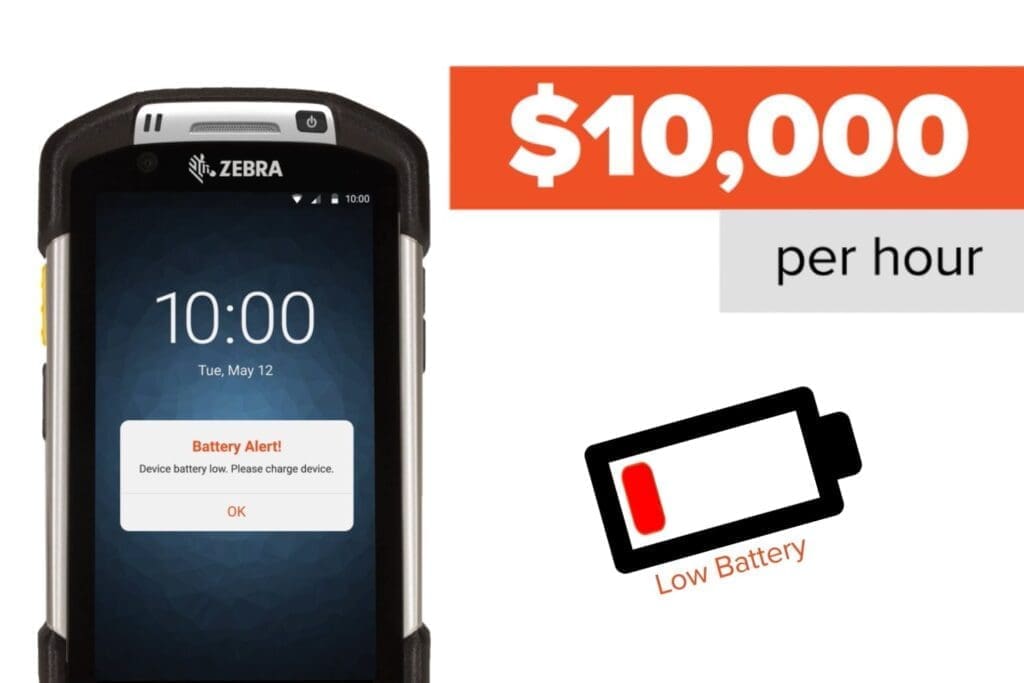
Studies show that 1 hour of unplanned downtime can cost up to $10,000 per hour… and about 45% of downtime is a direct result of hardware failure.
Several Root Causes of Mobile Device Battery Failures
Process Failures
Most commonly, devices are not able to function as required during the work day simplyl because procedures were not followed:
Mobile units were not properly connected to chargers
Mobile units have gone missing and have not been returned to the correct location
Equipment Failures
Less frequently, devices are not able to function due to problems or deterioration with the equipment itself:
Battery life is nearing its end, and remaining battery capacity is insufficient – charge can no longer be accepted due to poor battery health
Battery charging units have gone bad and are no longer capable of charging
Mobile devices themselves have some issue which impacts rate of battery drain or charge
Smart Mobile Device Battery Management
Whether battery pack problems are due to process or equipment failure, smart mobile device battery management software can help.
Smart battery software provides notice of charging status across the entire device fleet – quickly identifying devices with low battery level
Proactively notify teams of units with poor rechargeable battery health and low charge capacity, indicating that batteries need to be replaced or retired
Provide notice of devices which have gone missing and are not properly accounted for
Produce metrics which allow you to predict battery power life cycles and proactively mitigate downtime so you can reallocate time spent searching for uncharged batteries to more important tasks.
Contact CSSI For Mobile Device Battery Management
To discuss mobile battery monitor options with CSSI, please contact us . We would be glad to work with you to discussy battery performance tools to improve your mobile device uptime.
FAQ – Frequently Asked Questions About Mobile Device Battery Management
Q: How do we know when a mobile computer battery should be replaced rather than just recharged? A. Every lithium-ion battery loses capacity each time it goes through a charge cycle. Most enterprise batteries are rated for a few hundred full cycles before they drop well below their original capacity. Signs that a battery needs replacing include devices that no longer last a full shift, packs that feel warm or look swollen, and batteries that charge unusually fast or slow. Smart batteries in current rugged devices from Zebra, Honeywell, and Datalogic report health data such as cycle count and remaining capacity. Battery management software reads that data across the fleet and flags packs that fall below a threshold you set, so replacement is scheduled ahead of time instead of happening when a worker’s scanner dies mid-pick.
Q: Our devices use a mix of older and newer batteries. Is it worth tracking battery health across the whole fleet? A. Yes. A mixed fleet is where tracking pays off most, because one weak battery behaves like a strong one until it fails on the floor. Fleet-wide monitoring shows which packs are healthy, which are close to retirement, and which devices drain power faster than they should. That last group often points to a problem with a device or an app rather than the battery. This view lets IT budget battery replacements in planned batches instead of placing emergency orders, and it keeps workers from carrying a known-bad battery from shift to shift.
Q: Most of our downtime seems to come from devices that weren’t charged, not from bad batteries. Can battery management help with that? A. That’s very common. Process problems, such as devices left off the charger, put in the wrong cradle, or not returned at all, cause more downtime than worn-out batteries do. Battery management software helps here too. It shows which devices are charging and which aren’t, alerts supervisors to units below a set charge level before a shift starts, and reports devices that haven’t checked in, so missing units are found quickly. Combined with clear charging-station procedures and accountability at shift change, it makes “the scanner’s dead” a rare event instead of a daily one.
Q: Do cold storage and freezer environments affect battery health? A. Yes. Cold temperatures temporarily reduce how much power a lithium-ion battery can deliver, so devices run down faster in freezer zones. Repeated moves between cold and warm areas can also cause condensation, which is a risk to the battery and the device. For cold storage, use devices and batteries rated for freezer use, give batteries time to reach room temperature before charging, and expect shorter runtimes than the rated figures. Battery health data is especially useful here because it shows how fast packs are wearing in your real operating conditions, so you can set realistic replacement schedules and decide how many spare batteries you need.
Q: What’s the return on investing in a battery management system? A. The return comes from avoiding unplanned downtime and getting more use out of the batteries you already own. When a device fails mid-shift, the costs include an idle worker, a disrupted workflow, possible order errors or delays, and time spent hunting for a charged replacement. A battery management system reduces those events. It also stops you from replacing healthy batteries too early, cuts the number of spare batteries you have to stock, and gives managers data for planning purchases. For operations running dozens or hundreds of mobile computers across multiple shifts, those savings usually justify the system quickly. CSSI can help assess your current fleet and estimate what that return could look like for your operation.