Faster Shipping Operations – Pack Benches with Overhead Scanners
How Hands-Free Barcode Scanning Can Transform Your Pack Bench Efficiency
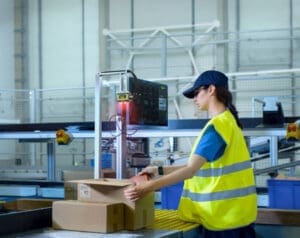
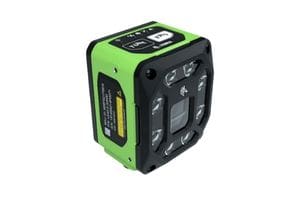
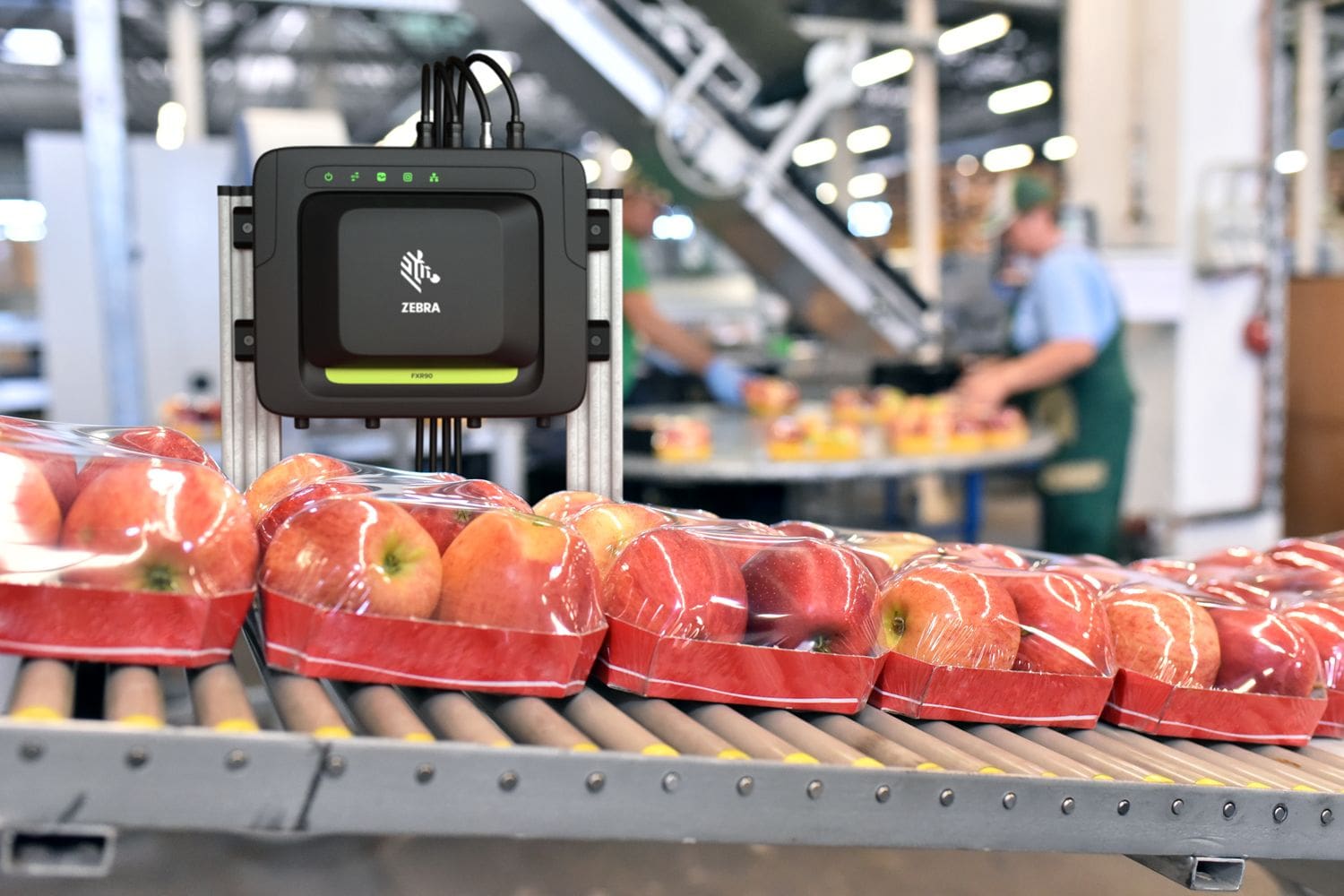
In the high-pressure world of modern logistics and manufacturing, every second counts at the packing bench. Manual barcode scanning processes—picking up a handheld device, aiming, scanning, and setting it down—add unnecessary friction to your workflow. The Zebra FS42 Fixed Industrial Scanner (part of Zebra’s line of fixed scanners ) eliminates these bottlenecks, delivering a seamless, hands-free experience that drives throughput and accuracy.
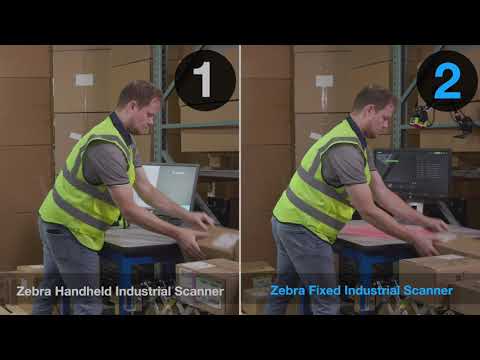
Check out the speed advantage of hands-free overhead scanners in the video below:
Why Upgrade Your Pack Bench to Use Fixed Overhead Scanners?
1. Boost Throughput by up to 33%: Moving from manual handheld barcode scanning to a fixed, hands-free solution such as the Zebra FS42 significantly speeds up operations. By removing the need to handle a device, operators can focus entirely on the package. The overhead scanner automatically captures data as the box enters the field of view, allowing your team to process more packages in less time.
2. Immediate Operator Feedback: Overhead Scanners like the FS42 provide clear, instant confirmation of every scan.
Visual Cues: 360° LED lights flash green for a successful decode.
Audible Alerts: An adjustable beeper ensures operators know the scan is complete without taking their eyes off the task. This immediate feedback loop reduces errors and ensures that only verified packages move to the next stage.
3. Superior Performance on Challenging Barcodes Shipping labels aren’t always perfect. They can be damaged, poorly printed, or placed on curved surfaces. The FS42 features ImagePerfect+ and a powerful quad-core processor designed to capture even the most challenging 1D, 2D, and DPM barcodes instantly. This reduces “no-reads” and manual data entry, keeping your lines moving.
4. Simple, Plug-and-Play Deployment Getting started is effortless. The FS42 offers:
USB-C Connectivity: Plug directly into a workstation, laptop, or tablet without complex cabling.
Auto-Tune Setup: A single button press automatically dials in the perfect image focus and lighting.
Integrated Lighting: Built-in illumination eliminates the need for expensive external lighting setups.
5. Future-Proof Your Investment The FS42 grows with your business. Start with high-speed barcode scanning today, and simply purchase a software license to unlock advanced capabilities later, such as:
Deep Learning-based OCR: Read text on labels without font training.
Machine Vision Tools: Automate quality inspections or anomaly detection.
Key FS42 Overhead Scanner Specifications for Logistics
Feature
Benefit
Processor
Quad-core processor for accelerated throughput
Connectivity
Dual Ethernet, USB-C, Serial, and Industrial Protocols
Feedback
360° LED Status Indicators and Adjustable Beeper
Sealing
IP65/IP67 (Dust tight and water-resistant)
Software
Zebra Aurora Focus™ for unified management
Contact Us to Discuss Faster Pack Bench Operations with Fixed Barcode Scanners
By integrating hands-free overhead scanning into your packing benches, you are investing in an intelligent automation solution that reduces labor costs, minimizes shipping errors, and accelerates delivery timelines. Empower your workforce with the tools they need to meet the escalating demands of the global supply chain.
To discuss the Zebra FS42 overhead scanner for your shipping operations, please contact CSSI.
FAQ – Frequently Asked Questions About Implementing Overhead Scanners on Pack Benches
Q: What exactly is an overhead scanner, and how is it different from the handheld scanners we use now? A. An overhead scanner, such as the Zebra FS42 Fixed Industrial Scanner, mounts above the pack bench and reads barcodes automatically as a package passes underneath, rather than requiring an operator to pick up a device, aim it, scan, and set it back down. Removing that manual pick-up-aim-scan-put-down cycle from every package is the main source of the efficiency gain, and CSSI cites throughput improvements of up to 33% from switching to this hands-free approach.
Q: Will it still work with damaged, poorly printed, or curved labels — that’s a big source of scanning failures for us today? A. Yes, that’s one of the scanner’s core strengths. The FS42 uses Zebra’s ImagePerfect+ technology paired with a quad-core processor to decode 1D and 2D barcodes as well as DPM (direct part mark) codes, even when labels are damaged, poorly printed, or on curved surfaces. So the barcode types and label conditions that typically slow down or defeat handheld scanning are exactly what this technology is built to handle.
Q: How do operators know a scan succeeded without having to check a screen? A. The system gives immediate visual and audible feedback at the point of scan. A 360° LED light ring flashes green when a barcode decodes successfully, and audio alerts (which are adjustable) reinforce the confirmation. That real-time feedback loop is what allows only verified packages to move forward, which helps reduce shipping errors without adding an extra manual verification step.
Q: What’s involved in installing and setting this up on our existing pack benches? A. Setup is designed to be straightforward. The FS42 connects directly to a workstation over USB-C, and an “Auto-Tune Setup” feature calibrates focus and lighting with a single button press — no manual tuning required. It also has built-in illumination, so you don’t need to budget for or install separate external lighting at each station. For broader deployments, the unit supports dual Ethernet, serial, and industrial protocol connectivity, and can be centrally managed with Zebra’s Aurora Focus software. It also carries an IP65/IP67 rating, so it can hold up in dusty or wash-down environments typical of shipping and warehouse floors.
Q: Do we have to buy full machine-vision capability up front, or can we start smaller and scale later? A. You can start smaller. CSSI positions this as a scalable investment: businesses can deploy the FS42 initially for basic barcode scanning, then add software licenses later to unlock deep learning OCR, text recognition, and machine vision capabilities as needs grow. That lets you phase the investment — starting with the throughput and error-reduction gains at the pack bench, then layering on more advanced automation once the initial rollout proves out.