
Cold Storage Warehouses: Why Freezer and Refrigerated Facilities Need a Different Approach to Mobile Computing
A cold storage warehouse — whether freezer facility, refrigerated distribution center, or blast-chilled processing environment — runs on the same fundamentals as any other warehouse. Pickers need accurate, real-time inventory data for perishable goods and temperature sensitive products. Supervisors need visibility into throughput. Systems need to talk to the WMS without friction. But layer sub-zero temperatures, constant condensation cycles, and insulated gloves on top of those requirements, and the mobile computers, tablets, and scanners that work perfectly well in an ambient DC start to fail — often at the worst possible moment, during peak season or a cold chain audit.
For IT and operations leaders evaluating AIDC equipment for a freezer or refrigerated environment, understanding what makes a cold storage facility different is the first step. Getting the sourcing and deployment right the first time is the second — and that’s where an experienced cold chain implementer earns its keep.
Why Cold Storage Equipment Sourcing Needs an Experienced Cold Chain Implementer
Every AIDC vendor’s data sheet uses the word “rugged.” Far fewer devices are actually engineered and validated for continuous freezer or refrigeration duty — and the difference between the two only shows up after equipment is deployed and failing in the field. This is exactly the gap an experienced value-added cold storage solutions expert like CSSI is built to close.
CSSI Offers Computing Solutions for Freezer Storage and Refrigerated Warehouse Environments
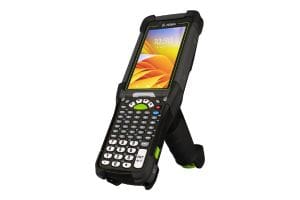
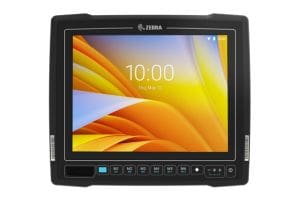
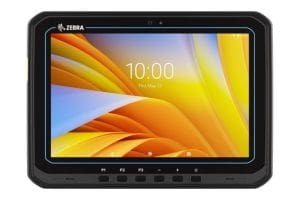
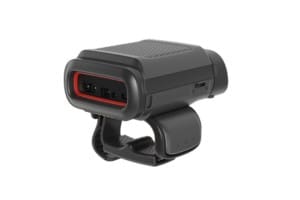
CSSI has worked directly with Zebra, Datalogic, and Honeywell Productivity Solutions to source, configure, and support cold storage solutions for refrigerated distribution, freezer storage, and blast freezing environments. That means specifying the right device and accessory combination for each thermal zone in a facility, planning battery and charging logistics around real freezer performance, and building a support relationship that accounts for how cold storage equipment actually ages in the field.
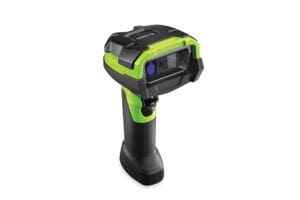
The Environmental Challenges Unique to Cold Storage Warehousing
A cold storage facility asks more of a device than a standard warehouse does. The core challenges fall into a few categories: temperature extremes, moisture and condensation, human factors like gloved operation, and the physical toll of constant transitions between climate zones.
| Extreme and Sustained Cold | Freezer warehouses commonly operate between -10°F and -20°F, with blast freezing zones running even colder. Refrigerated (cooler) environments typically sit between 28°F and 50°F. Consumer-grade and even many “rugged” devices are only rated for intermittent cold exposure, not sustained operation. Below a device’s rated operating range, LCD screens slow down and can distort, capacitive touchscreens lose responsiveness, and internal components experience accelerated wear. |
| Battery Performance in the Cold | Lithium-ion batteries lose usable capacity as temperatures drop — sometimes 30-50% of rated runtime in a true freezer environment. A battery that comfortably covers an 8-hour shift at room temperature may not make it through a break period in a -10°F freezer. This drives real operational decisions: battery hot-swap programs, charging stations located outside the cold zone, and battery conditioning cycles that most facilities never have to think about. |
| Condensation, "Sweating," and Ice Formation | The single biggest culprit in cold storage device failures isn't the cold itself — it's the transition in and out of it. When a device moves from a -10°F freezer into a 70°F dock or office, warm moist air condenses on every cold surface it touches, including the scan window, screen, connectors, and battery contacts. Repeated dozens of times a day, this condensation cycle drives corrosion into seams and ports, fogs scan engines and displays, and can short out charging contacts. Devices that aren't properly sealed will fail from moisture ingress long before they fail from cold alone. |
| Frost and Fogging on Scan Windows | Barcode imagers and laser scanners depend on a clear optical path. Frost or condensation on the scan window directly degrades read rates — exactly the kind of intermittent, hard-to-diagnose problem that erodes picker confidence and slows throughput without ever showing up as a clean “device failure.” |
| Glove-Friendly Operation | Workers in freezer and cooler environments wear insulated gloves, sometimes multiple layers. Standard capacitive touchscreens are designed for bare-finger operation and simply don’t register a gloved touch reliably. Devices need touchscreens purpose-built for glove use, along with physical keypads, larger touch targets, and trigger mechanisms on handheld scanners that can be operated without fine dexterity. |
| Enclosure Sealing and Ingress Protection | Cold storage environments frequently combine moisture, washdown cleaning, and temperature cycling. Devices need genuine IP65 or IP66 sealing — not a marketing claim, but a tested rating — to keep condensation and cleaning fluids out of seams, ports, and battery compartments over years of daily use. |
| Drop Resistance, Amplified | Gloved hands and cold-stiffened fingers drop devices more often than bare hands do. The MIL-STD-810H drop and vibration ratings that matter in any rugged deployment matter even more here — and the tolerances need to hold up at sub-zero temperatures specifically, not just at room temperature. |
| Label, Ribbon, and Printhead Behavior in the Cold | It isn’t just handhelds and scanners. Label adhesives lose tack in the cold, thermal transfer ribbons become brittle, and printheads are vulnerable to the same condensation cycle as scan windows. Label printing for cold chain applications requires media and hardware specifically rated for freezer conditions, or facilities end up with labels that won’t stay adhered to a frosted case. |
None of these challenges are exotic or unpredictable — but they are easy to underestimate until a cold storage facility has already standardized on the wrong equipment, at which point the fix means reopening a purchasing decision, retraining staff, and absorbing downtime during exactly the peak periods a cold chain logistics operation can least afford.

The CSSI Approach to Cold Storage Warehousing
To discuss your inventory management and cold storage needs for operational efficiency, please contact the cold storage solutions team at CSSI by filling out the form below. We will assess your needs, present solutions, and help to arrange a proof-of-concept test in your actual freezer or cooler environment.